Both hands
already on the bike
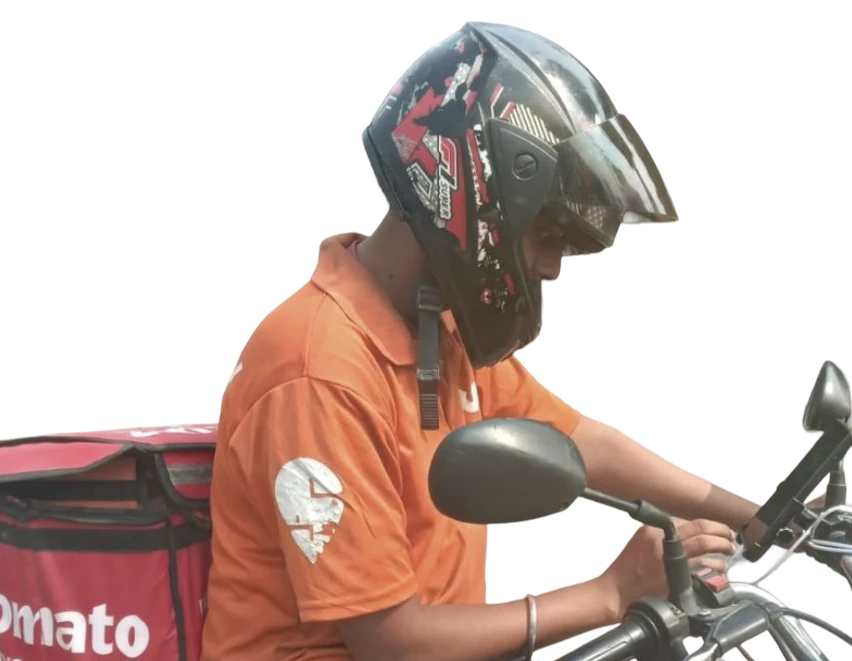
Riders accept orders, follow navigation, answer calls and confirm reroutes while both hands work the vehicle and both eyes watch traffic.
Hi, I am Akhil Cleatus
Multimodal Interactions · NID Bengaluru · 2026
Intro
Gig riders decide on a ride in one or two seconds, with both hands on the bars and both eyes on traffic. Tapp moves that decision off the screen and onto the fingertips.
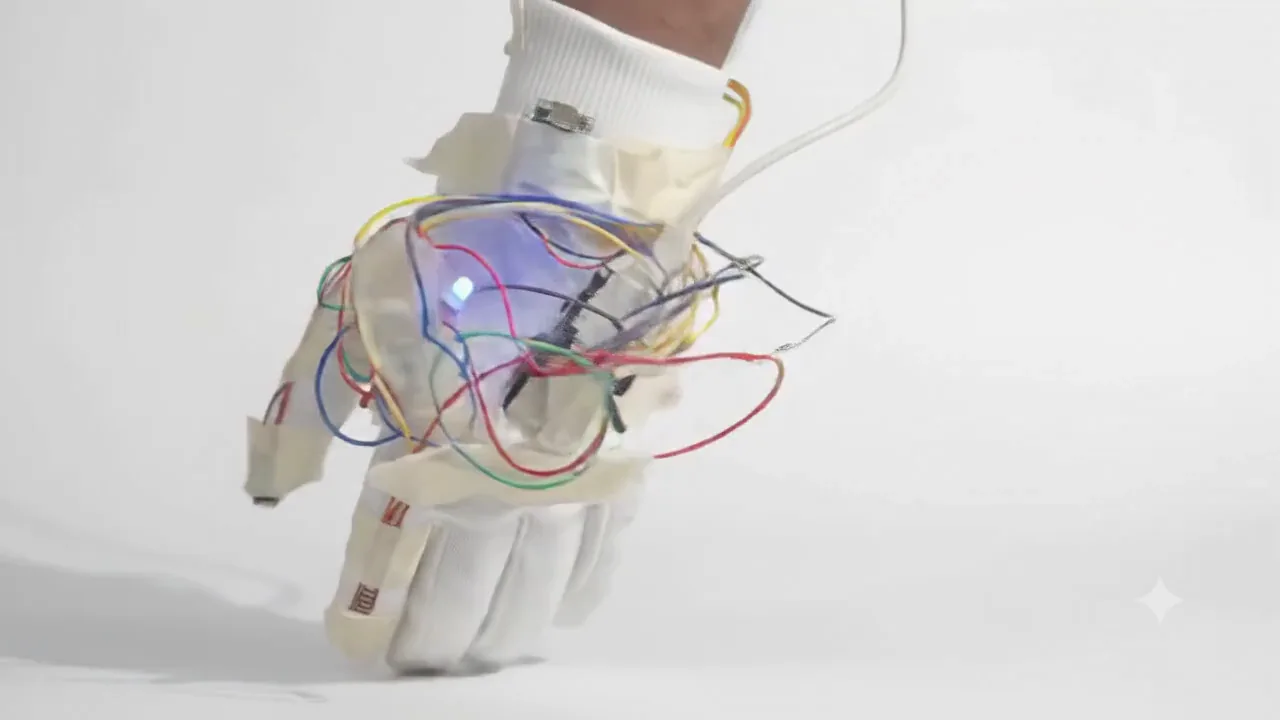
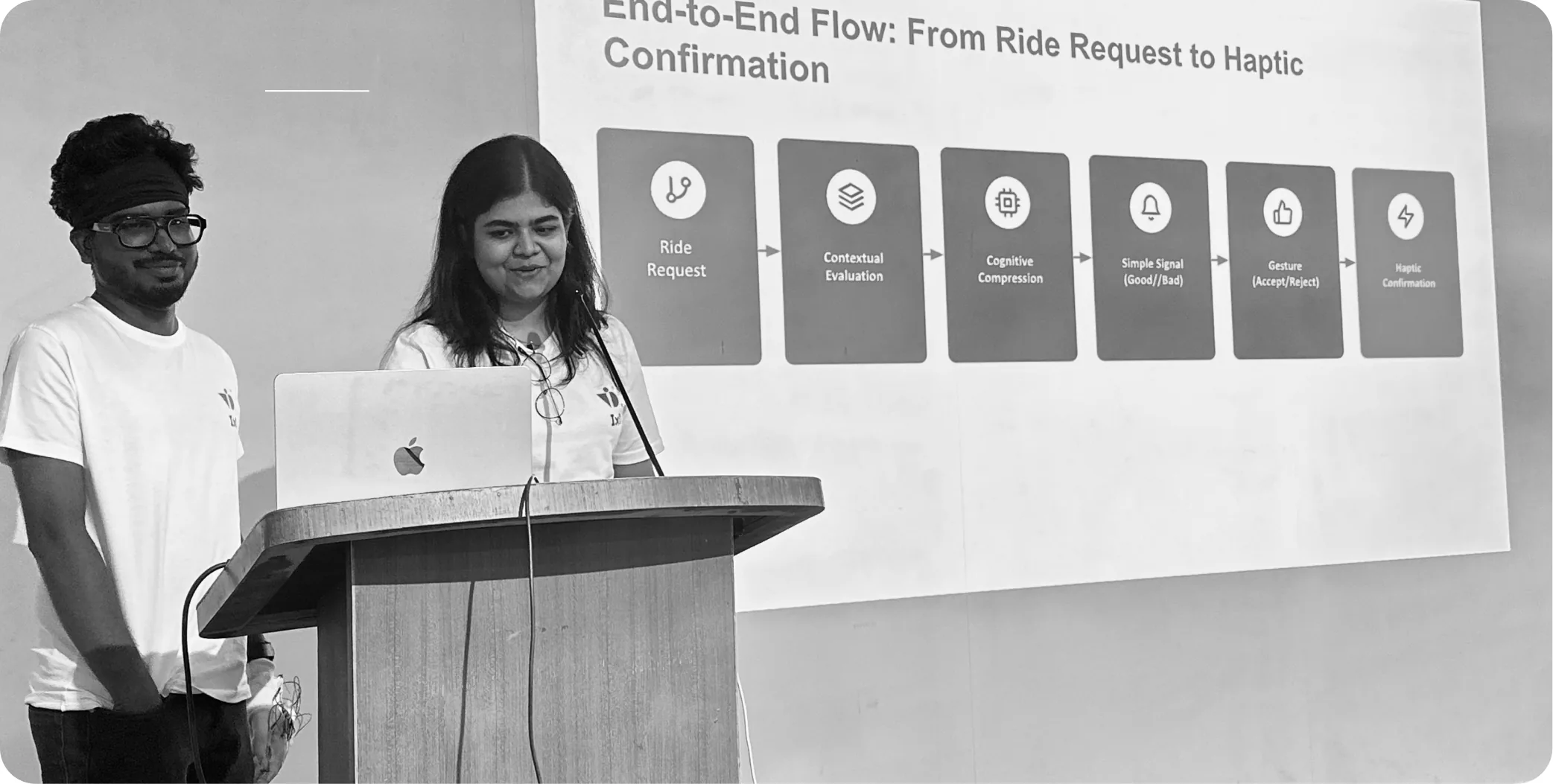
Tapp is a wearable, app-connected accept/reject interface for two-wheeler gig riders on Swiggy, Zomato, Rapido and Uber. The app does the mental arithmetic and shows a single good-or-bad signal; the rider confirms with a finger gesture made without loosening their grip. With Anjali Vishnu, I took it from rider interviews to a working ESP32 glove paired with an Android app.
Delivery and bike-taxi riders rely on their phones while riding, creating a conflict between staying connected to work and staying focused on the road.
Outcome
A two-second, multi-variable judgment becomes one green or red light, answered with a pinch. The rider never takes a hand off the bar.
At a Glance
The problem
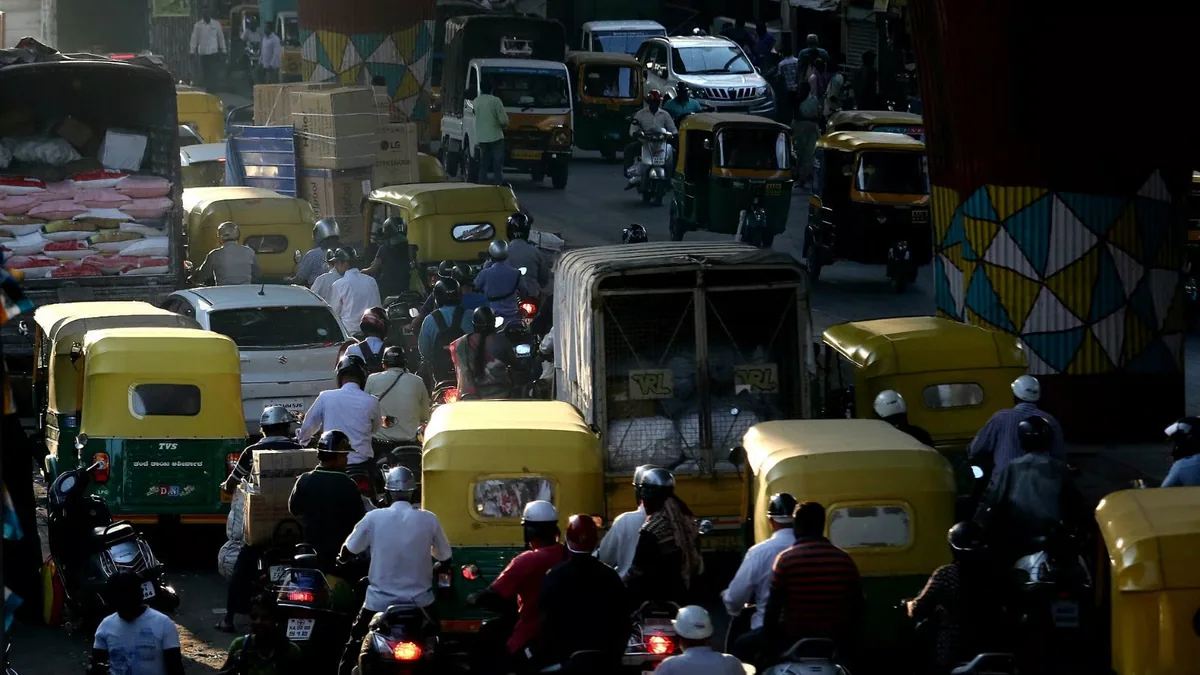
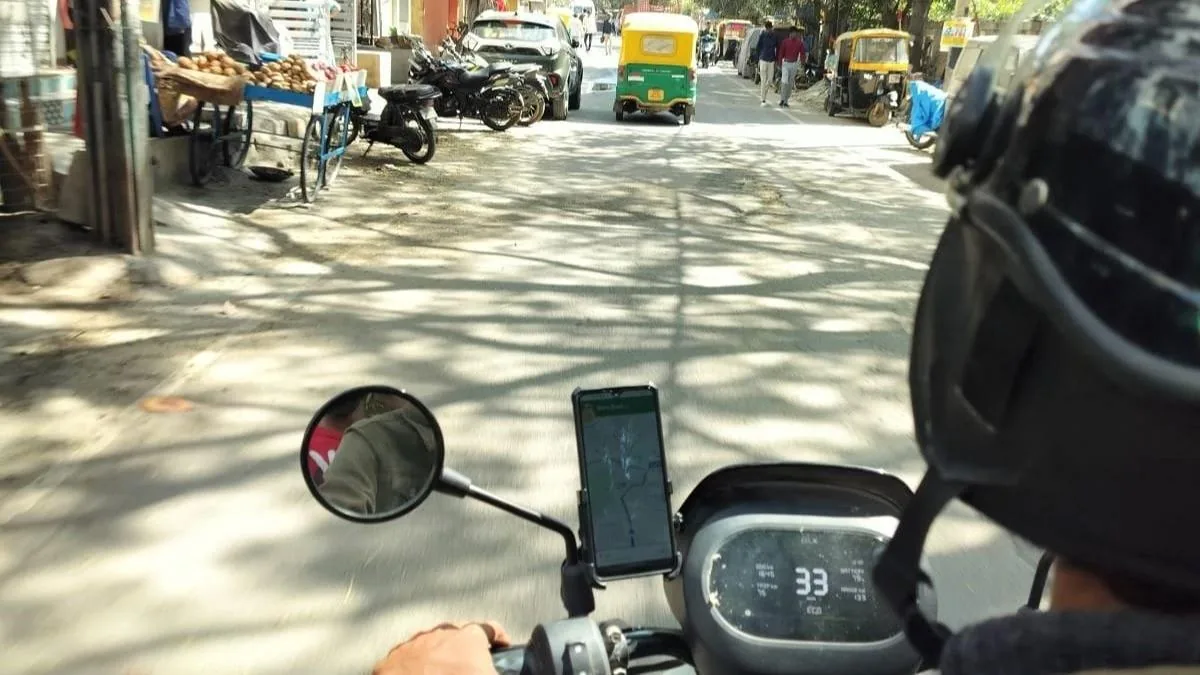
Reaching for a handlebar-mounted phone pulls grip and attention away exactly when road risk is highest.
Both hands
Riders accept orders, follow navigation, answer calls and confirm reroutes while both hands work the vehicle and both eyes watch traffic.
30–40%
Doctors at the COMET 2025 conclave on medical emergency and trauma, as reported by The Times of India, April 2025.

The Times of India
https://timesofindia.indiatimes.com › city › articleshow
Over 30% road accidents due to mobile phone use, say docs
13 Apr 2025 — Experts at the Conclave of Medical Emergency and Trauma (COMET) 2025 said, “Around 30-40% of road accident cases are linked to mobile phone …

NDTV
https://www.ndtv.com › India News
Phone Use While Driving Causes More Deaths Than Red …
4 Sept 2024 — Using mobile phones while driving has caused four times more deaths than red light jumping, according to a new study. with 61,038 fatalities in …
“Not how do we make the phone hands-free but which tasks can survive being done while moving, through which non-visual channel, and at what cost to grip.”
Research
We onboarded riders by asking what matters to them (₹/hour, short pickups, busy destinations, heading home, avoiding traffic), then ran structured interviews: what do you check first, what makes you reject instantly, have you ever accepted and regretted it a second later?
Personas built from rider conversations in Bengaluru. Quotes are paraphrased from what they told us.
Ravi, 27Food delivery rider · Koramangala
“If I don’t accept in a few seconds, someone else gets it. So I pick up the phone even while I’m moving.”
Manju, 29Grocery + food rider · HSR Layout
“I accept first and check the pay later. Sometimes it’s a bad order, but if I stop to think, it’s gone.”
Imran, 31Bike-taxi + delivery rider · Whitefield
“When there’s a passenger behind me and I reach for the phone, they get scared. One customer asked me to stop and do it later.”
Priya, 28Bike-taxi passenger · Indiranagar
“The rider kept tapping his phone at every signal, and once while moving. I held on to the seat the whole ride.”
Suresh, 24Quick-commerce rider · E-City
“In this traffic you can’t take a hand off the handle. Buses on one side, autos on the other. The phone mount is useless then.”
Arun, 35Full-time delivery rider · Jayanagar
“Between a signal turning green and a bus cutting in, there’s no moment where looking down is safe.”
Kiran, 33Bike-taxi + food rider · Marathahalli
“When an order pops up with a customer on the back, I either miss it or scare them. Both cost me.”
What we thought happens
One fare-per-distance number judged in isolation, the assumption baked into most accept screens.
What actually happens
A forward-looking judgment made in one or two seconds, often one-handed, in motion.
The hierarchy of attention, in the order riders read an offer
Destination comes first; it decides the next 20–40 minutes.
Read relative to distance and time, not as an absolute number.
Long pickups are the single most common reason to reject.
Duration shapes fatigue and how many more rides fit the shift.
Riders weigh demand at the drop point before they accept.
 Instant reject
Named first and most often, before fare or destination. But reject too many and the algorithm sends fewer rides from that area.
 Instant accept
A big enough number overrides the rest of the evaluation almost entirely.
Design principle
The system does the arithmetic: pay rate, pickup distance, payout and zone, checked against the bar the rider set. The rider still makes the call, with a pinch.
They run a rule the driver configured once (accept if ₹/hr ≥ 100 and trip < 40 min) and only hand over the ambiguous middle. Tapp keeps the same contextual computation, but every offer still reaches the rider as one signal, confirmed with a physical gesture instead of a screen tap.
Mystro, Gig U
Rules set once at onboarding: ₹/hr, ₹/km, trip time, areas, rating.
Runs a fixed decision tree and only hands over the ambiguous middle.
The driver is taken out of the decision.
Our approach
Same filtering, but every offer can still reach the rider.
The decision is compressed into one signal: green or red.
The rider confirms with a gesture, not a screen tap.
Unwanted offers lapse quietly, so frequent rejects don’t cost future offers.
Gestures
Car steering wheels and bike switch clusters already put controls under the thumbs. On a two-wheeler, though, the left thumb also works the horn and indicators while the fingers hold the clutch, and the right hand owns the throttle. We started on a bicycle rig in class, then photographed nineteen poses on a real grip.
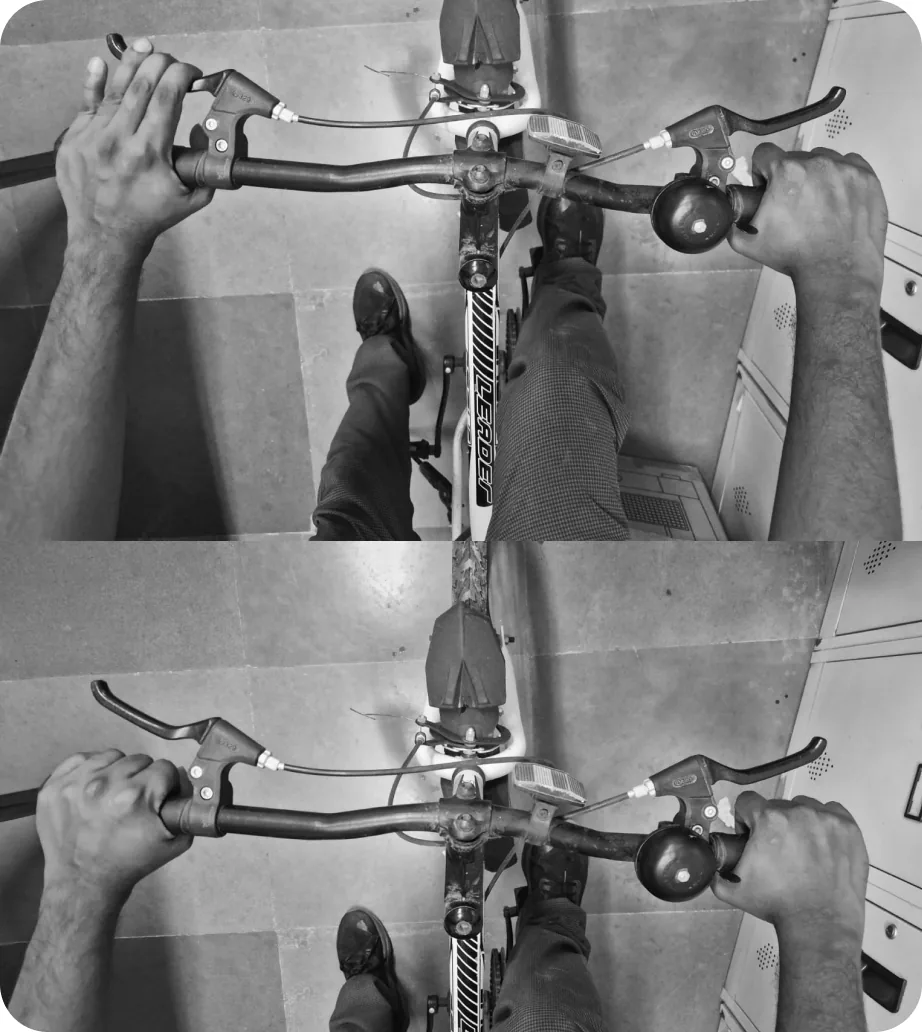
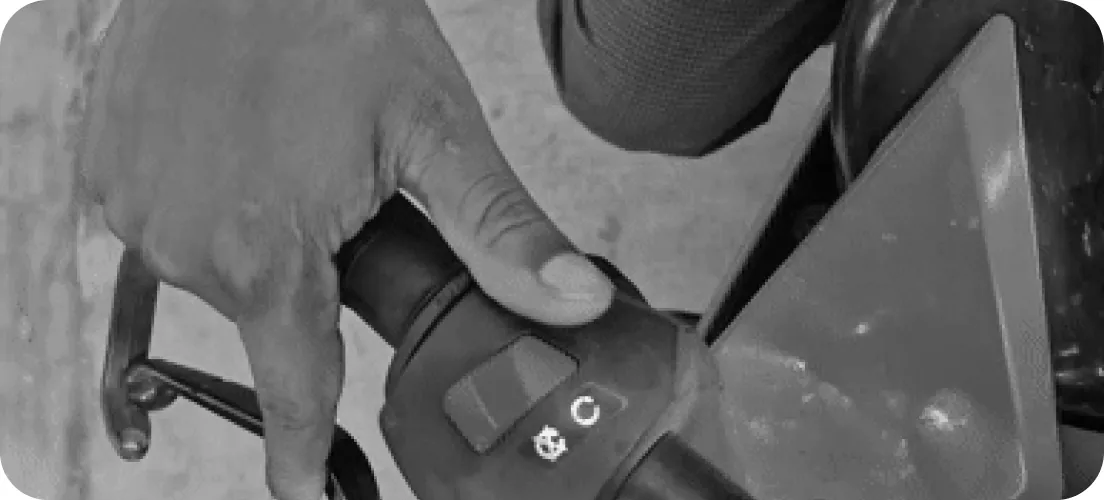
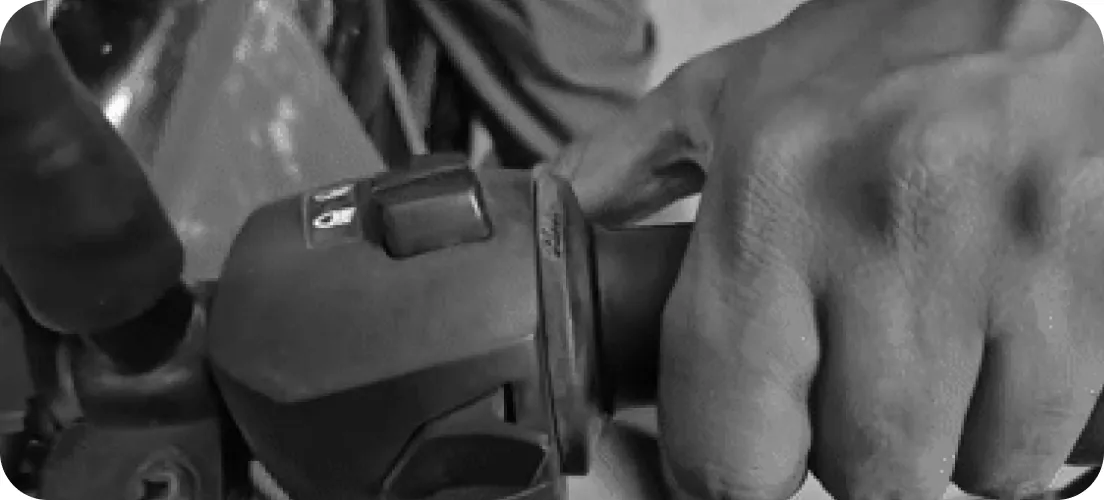
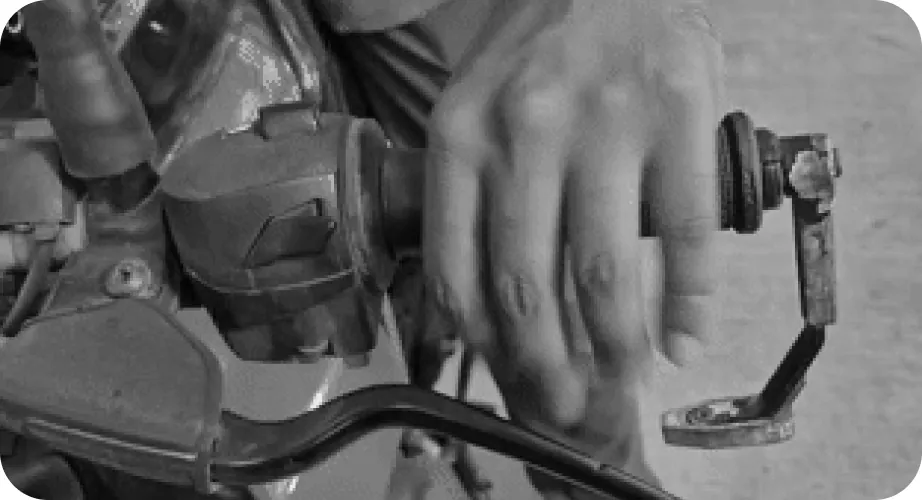
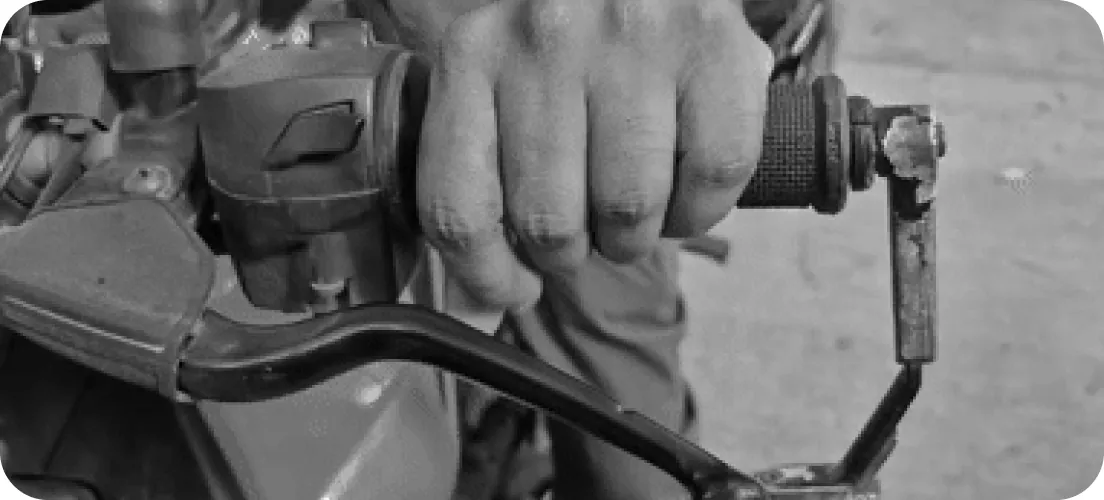
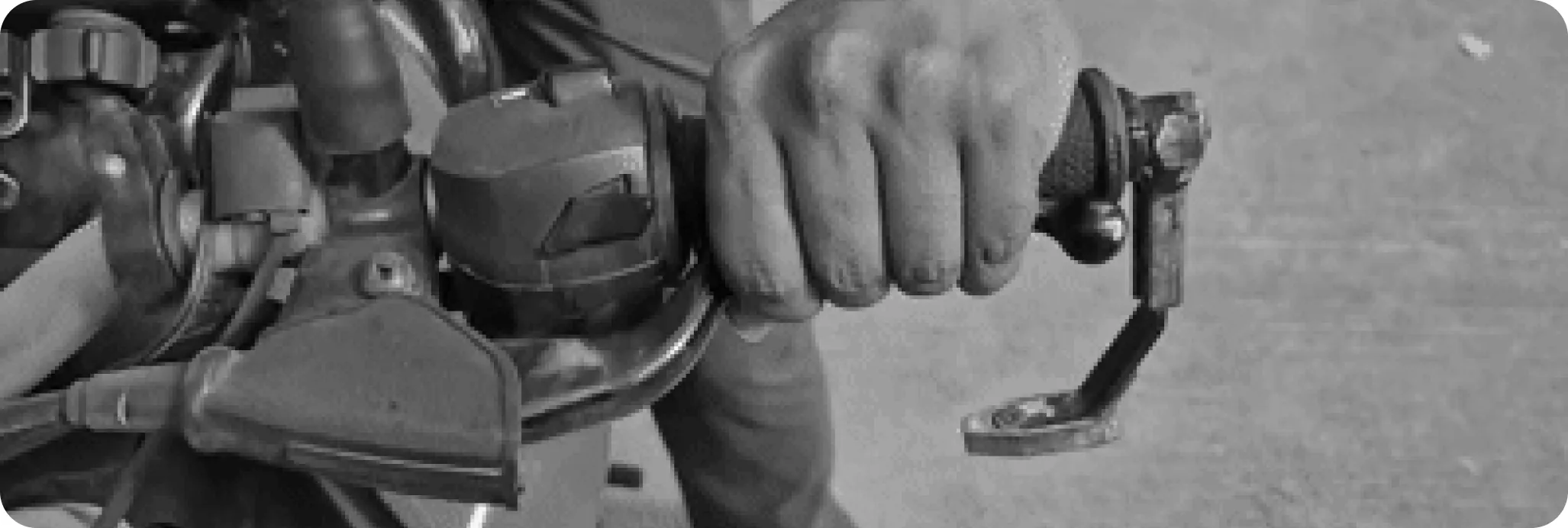
Where interactions already live
Two-wheeler riders, most ride-hailing drivers in dense Indian cities, rely on split left and right switch clusters. Any new control has to fit around them.
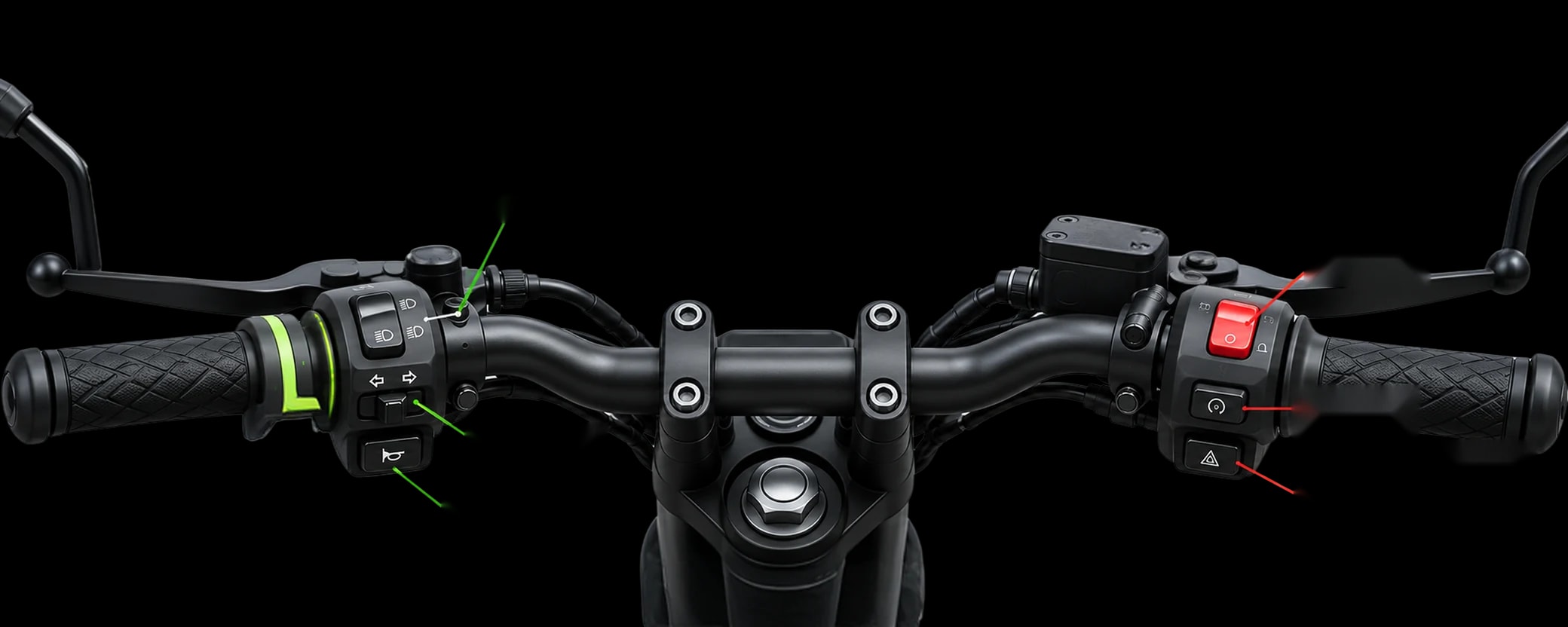
Headlight high/low beam(press)
Indicator switch(left / right)
Horn(press)
Kill switch(on/off)
Start button(press)
Ride mode(press)
Left grip(clutch hand)
Right grip(throttle hand)
Left cluster
Worked by the left thumb while the same hand pulls the clutch. It only tolerates light, deliberate presses.
Right cluster
Shares space with the throttle hand: the busiest, most safety-critical spot on the vehicle.
Design takeaway
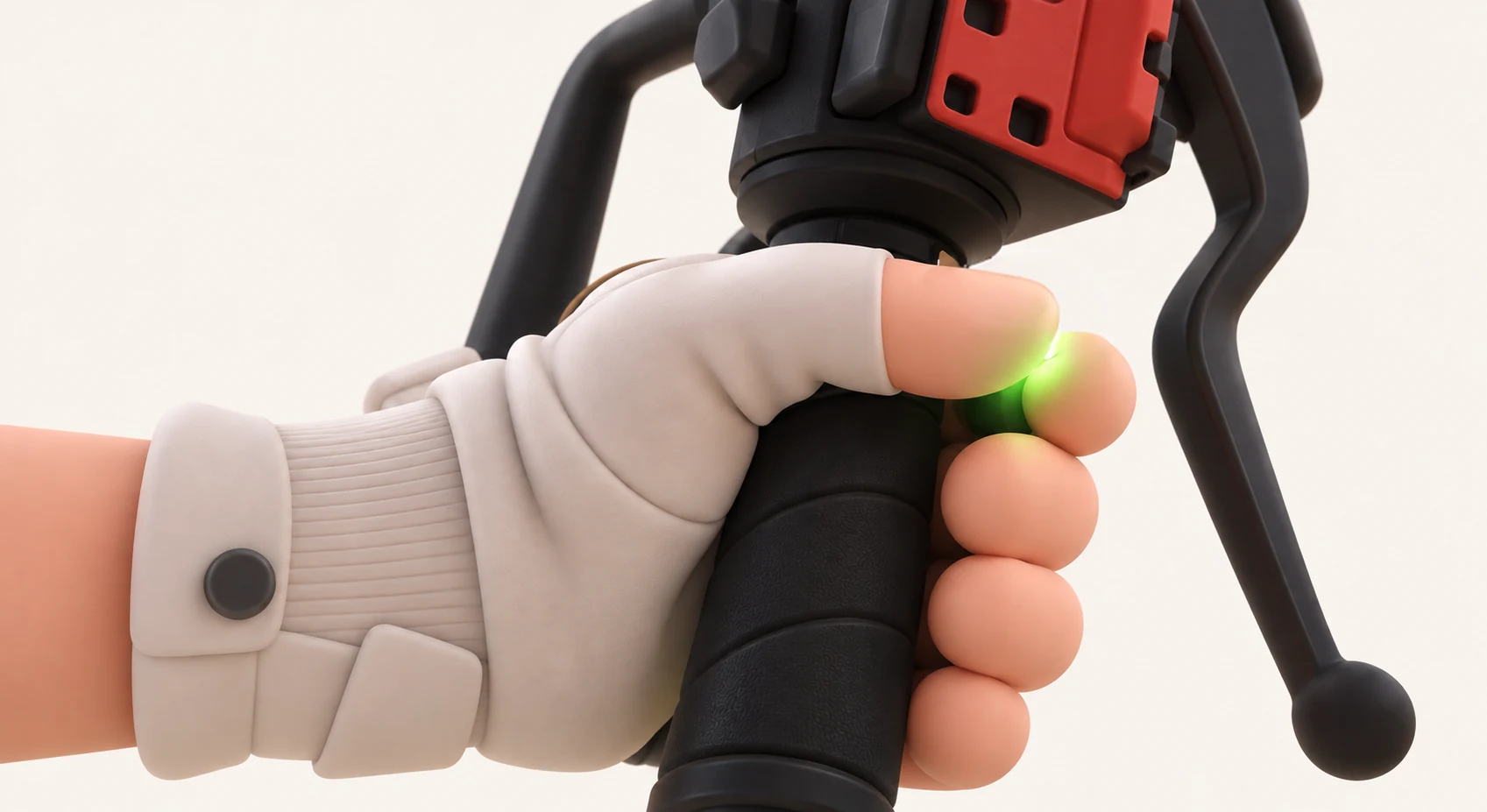
Riders have far less spare movement than car drivers. Tapp’s main gesture lives on the index finger and thumb of the left hand, and never asks for a full release of the grip.
Multimodal interaction matrix
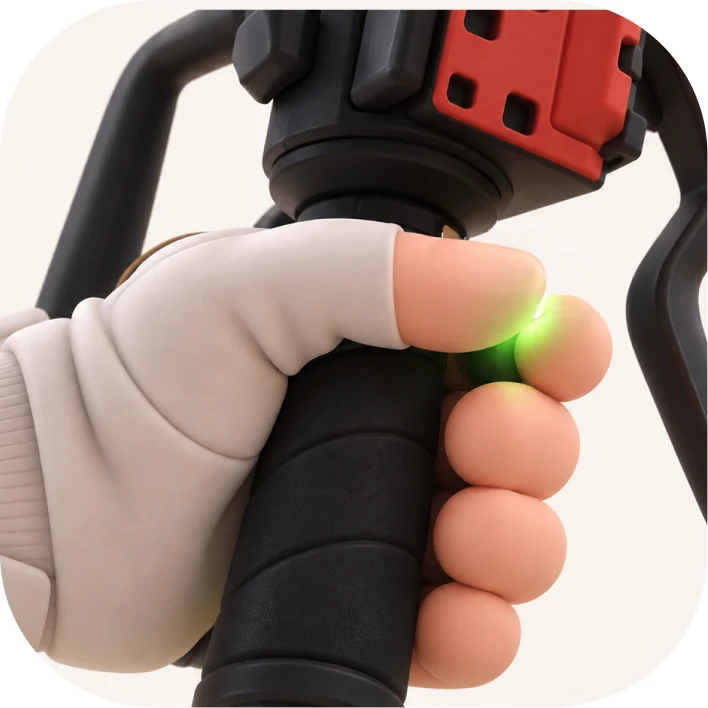
An offer lands: one buzz, and a green light if it clears the bar. Pinch the touch pad to take it; the light turns blue.
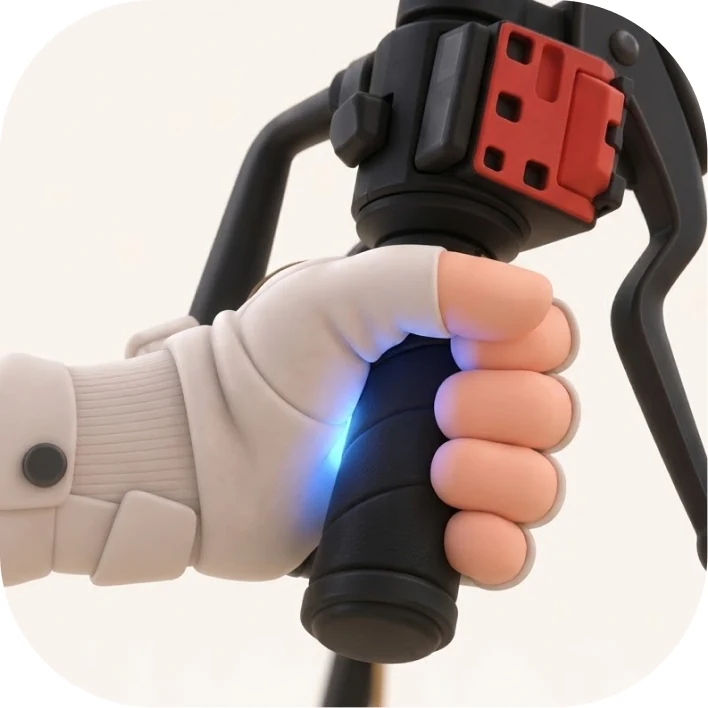
Map drifted? Squeeze the grip for half a second. Two short buzzes, and the map snaps back.
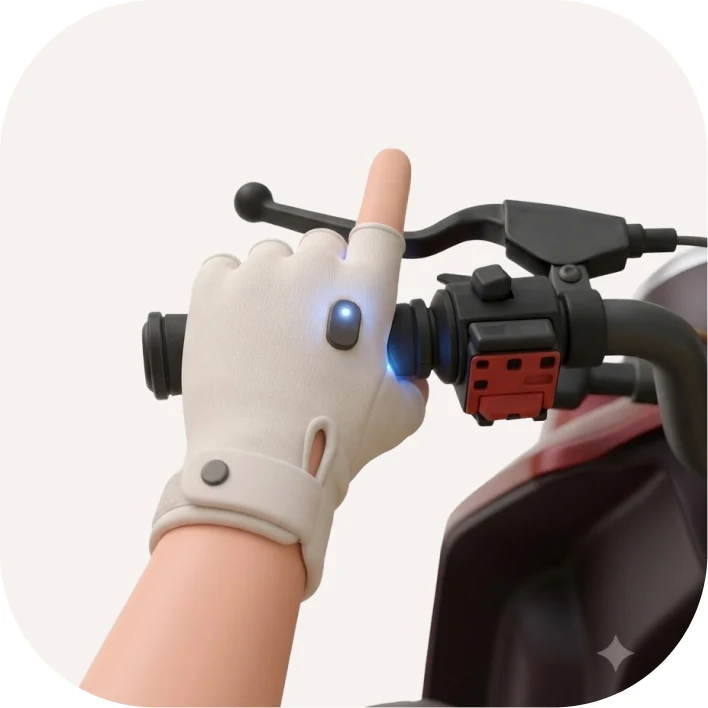
A call comes in. Bend, then straighten the index finger and hold for 2 s. A tick at 1 s, a buzz when it connects.

Riders wear the glove for hours while gripping, braking and shifting. Every gesture had to survive that without firing by mistake.
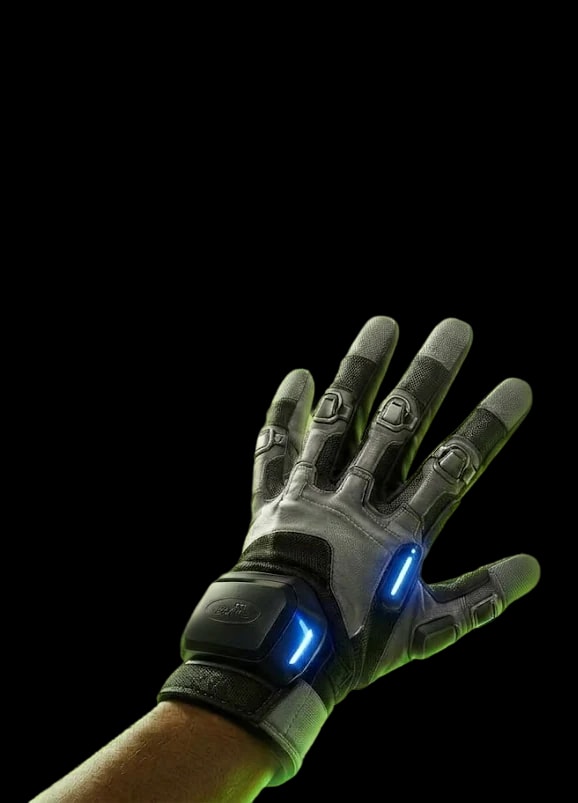

Each gesture must be held: 60 ms on the touch pad, half a second of squeeze, two seconds of a straight finger. A bump on the road is too short to count.

The finger must first be bent on the grip, then straightened and held. Simply letting go of the handle doesn’t answer anything.

A resistor calmed the over-sensitive flex sensor, the force sensor now needs a firmer press, and the touch pad no longer fires before contact.

The glove vibrates when a gesture is accepted, then ignores input for a moment so one gesture can’t fire twice.
Resilience
Traffic, dust, heat and irregular breaks were treated as design inputs. These are the conditions the glove is designed for; field tests will confirm each one.
Logic reads relative bend, not an absolute value, so moisture drift matters less.
Accept zone relies on sensors inside the glove, not an exposed surface.
Every gesture must be held, so high-frequency buzz never counts.
Gestures are read from bend, pressure and timing, not skin contact.
The app falls back to on-screen Accept and Decline buttons.
Short holds fit the moments at a signal when the hands are freest.
Prototype
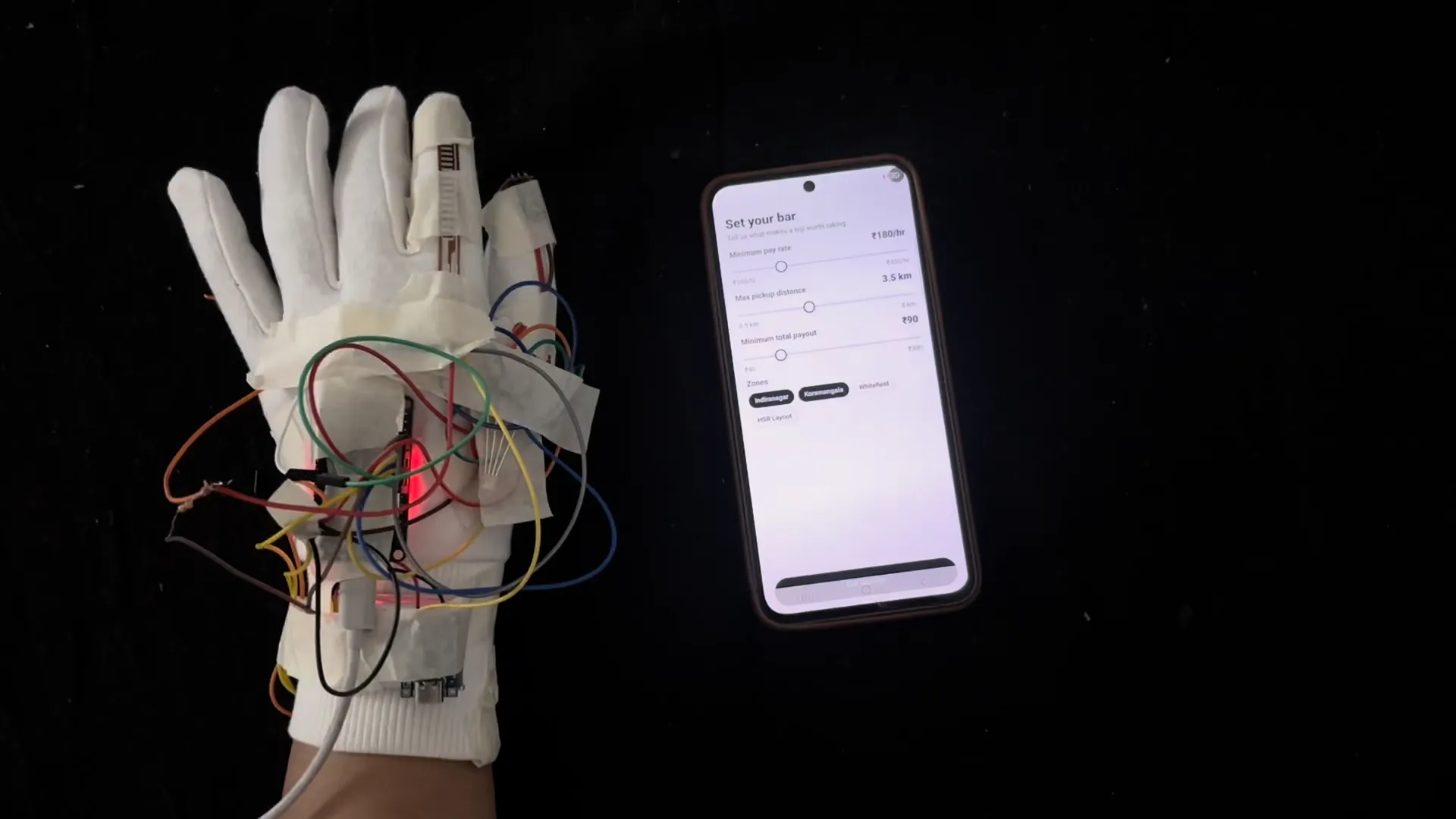
A touch sensor registers taps to accept rides, a flex sensor on the index finger detects bends to answer calls, and a force sensor in the palm detects grip pressure to re-centre the map. An RGB LED and a coin vibration motor provide visual and haptic feedback for each action. Powered by an ESP32, the prototype evolved through repeated trials, testing, and iterations.
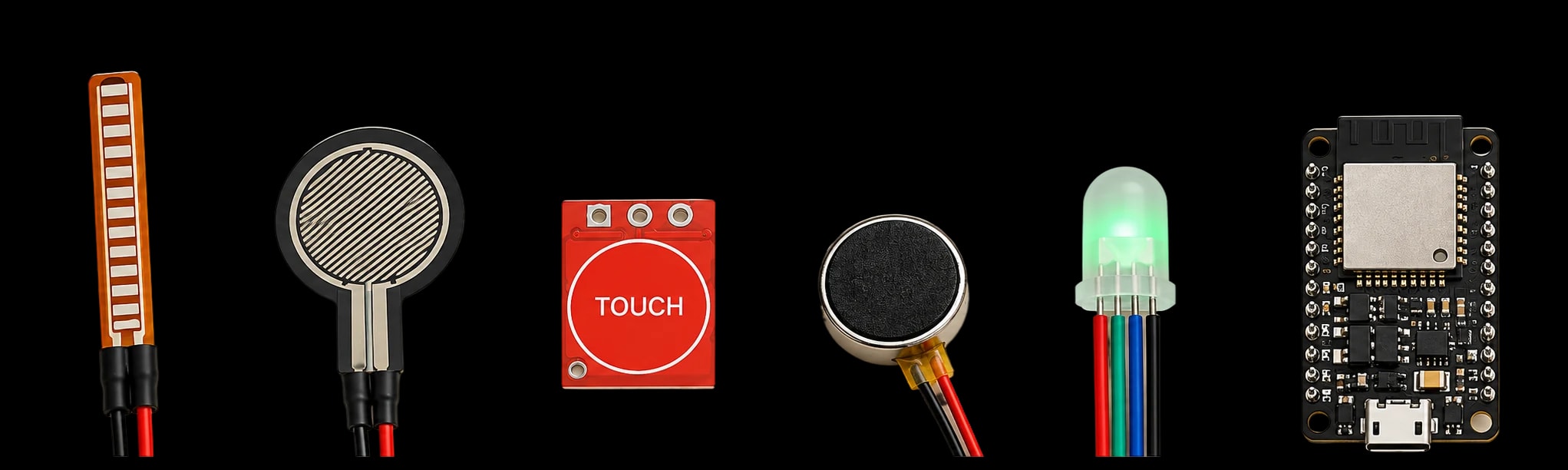
From a breadboard on the bench to a glove that survives a ride
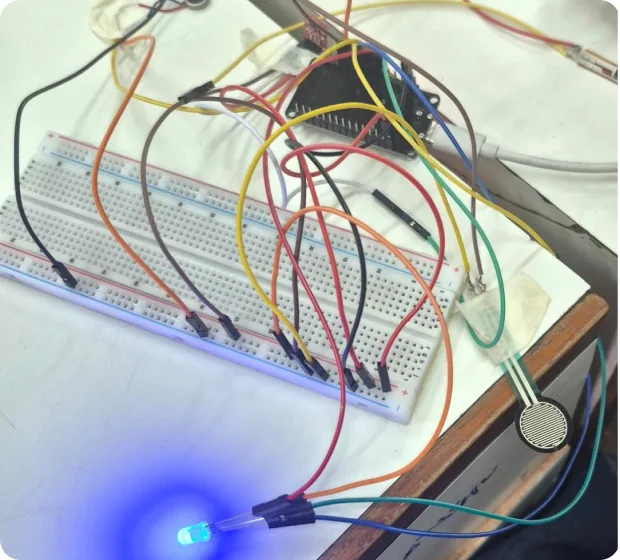
ESP32, sensors and LED proven on the bench before anything touched a glove.
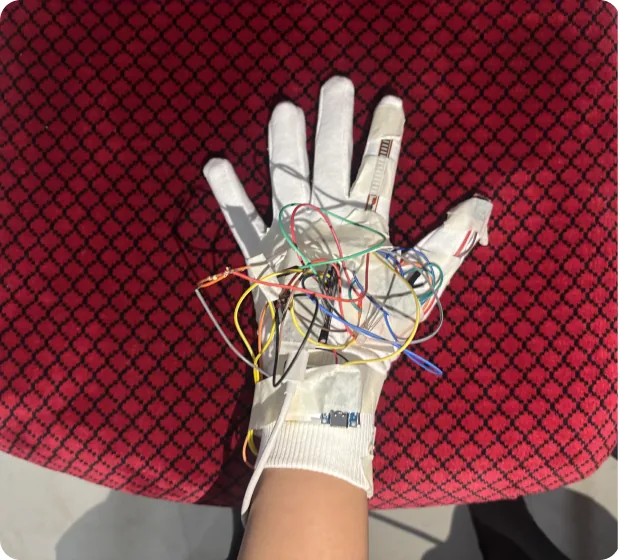
Marking where each finger bends and presses on a real grip.
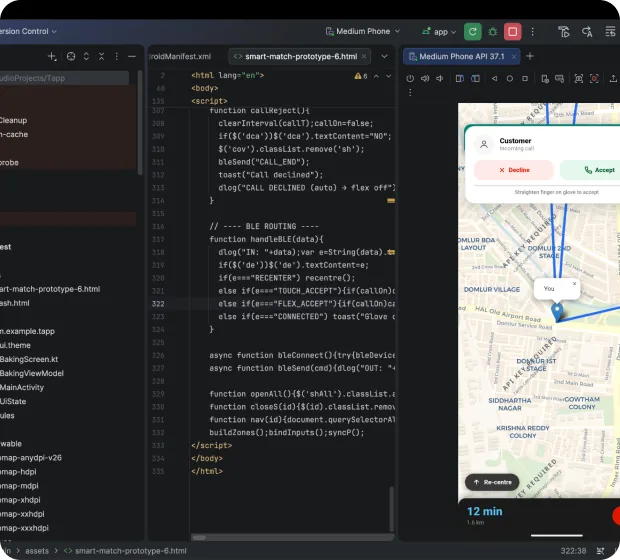
The Android app built in Android Studio, wired to gesture events over Bluetooth.
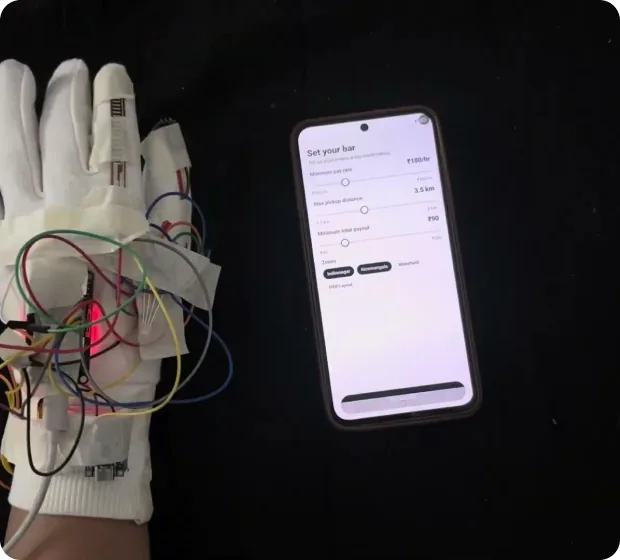
Tuning thresholds until gestures fired only when the rider meant them.
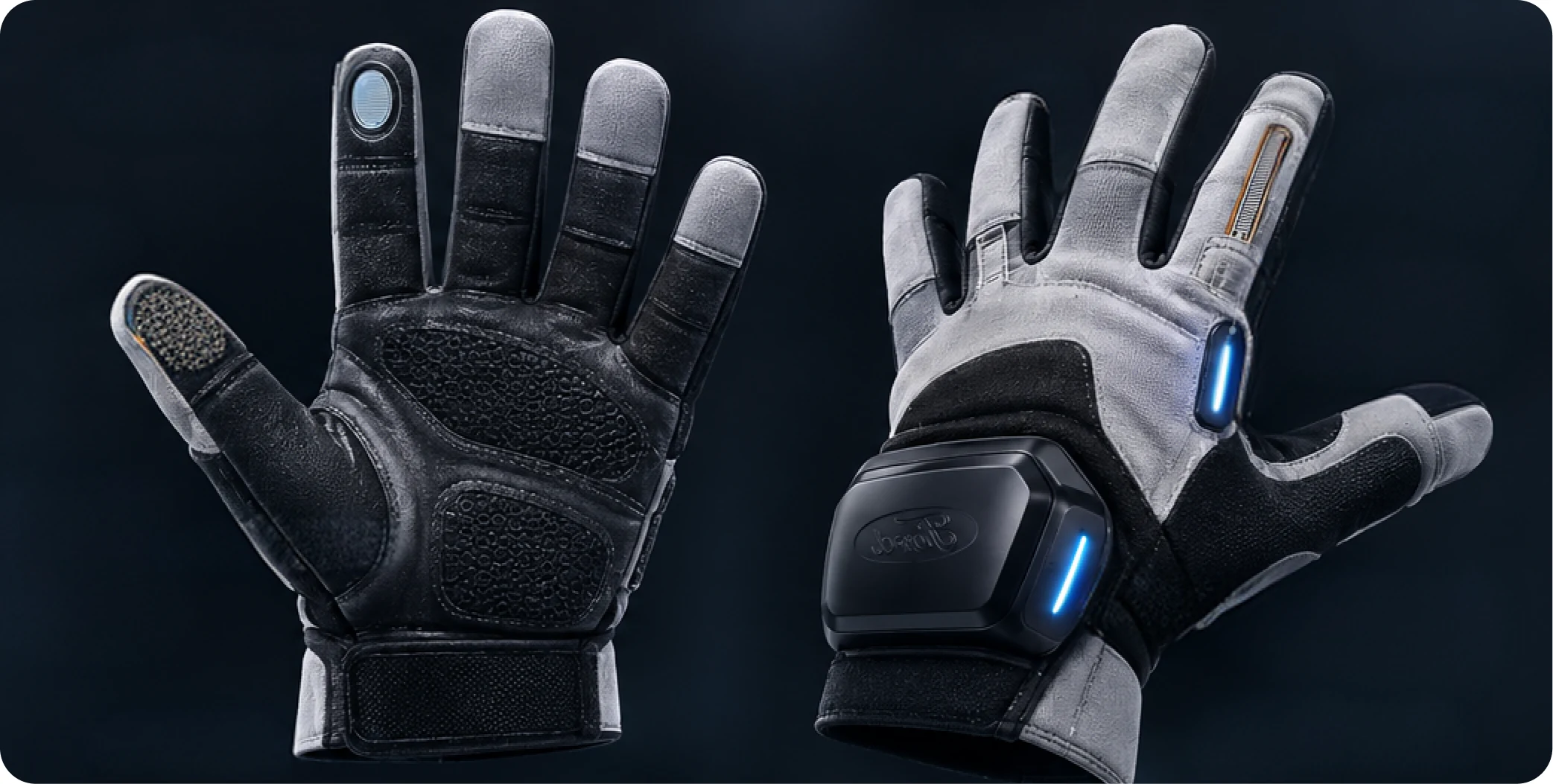


Touch Sensor( Index finger tip)
Force Sensor( Palm force sensing)
Flex sensor( Inside index finger along length )
RGB LED( Status Indicator )
Main Module(ESP32 + Battery + Haptic Driver )
Pin-for-pin from the final firmware. Both bend and pressure sensors are voltage dividers into the ESP32’s ADC; the motor is switched through a MOSFET with a flyback diode.
The app
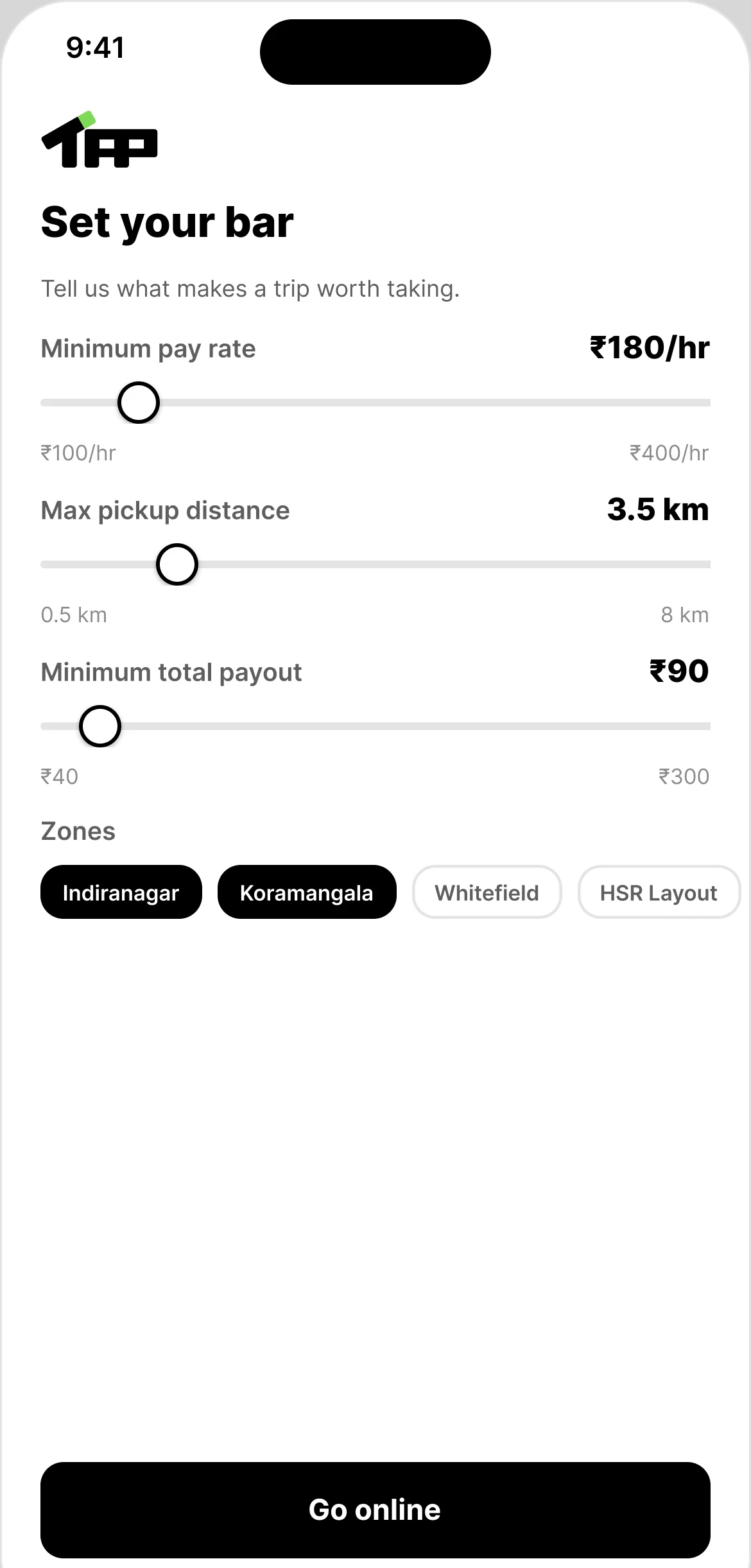
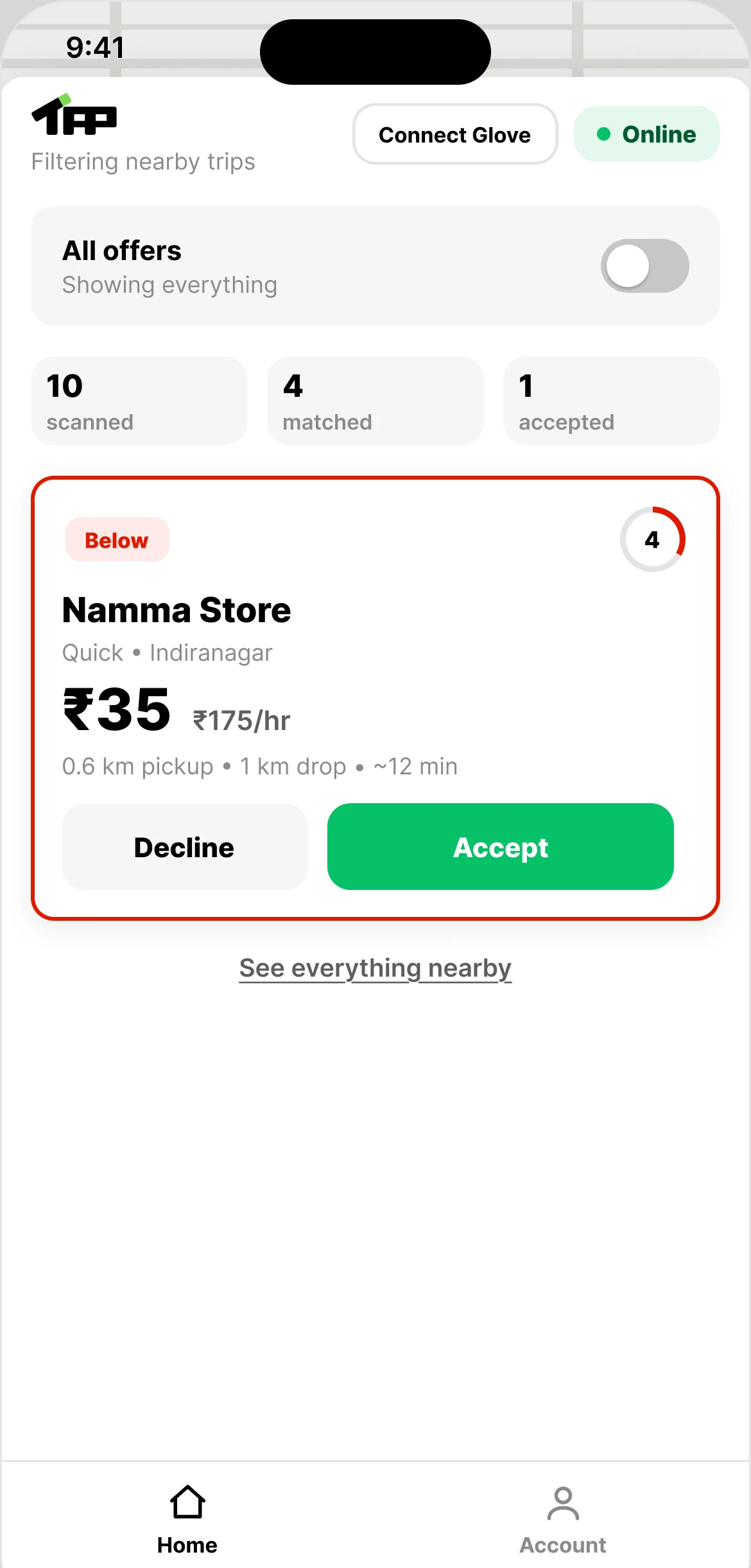
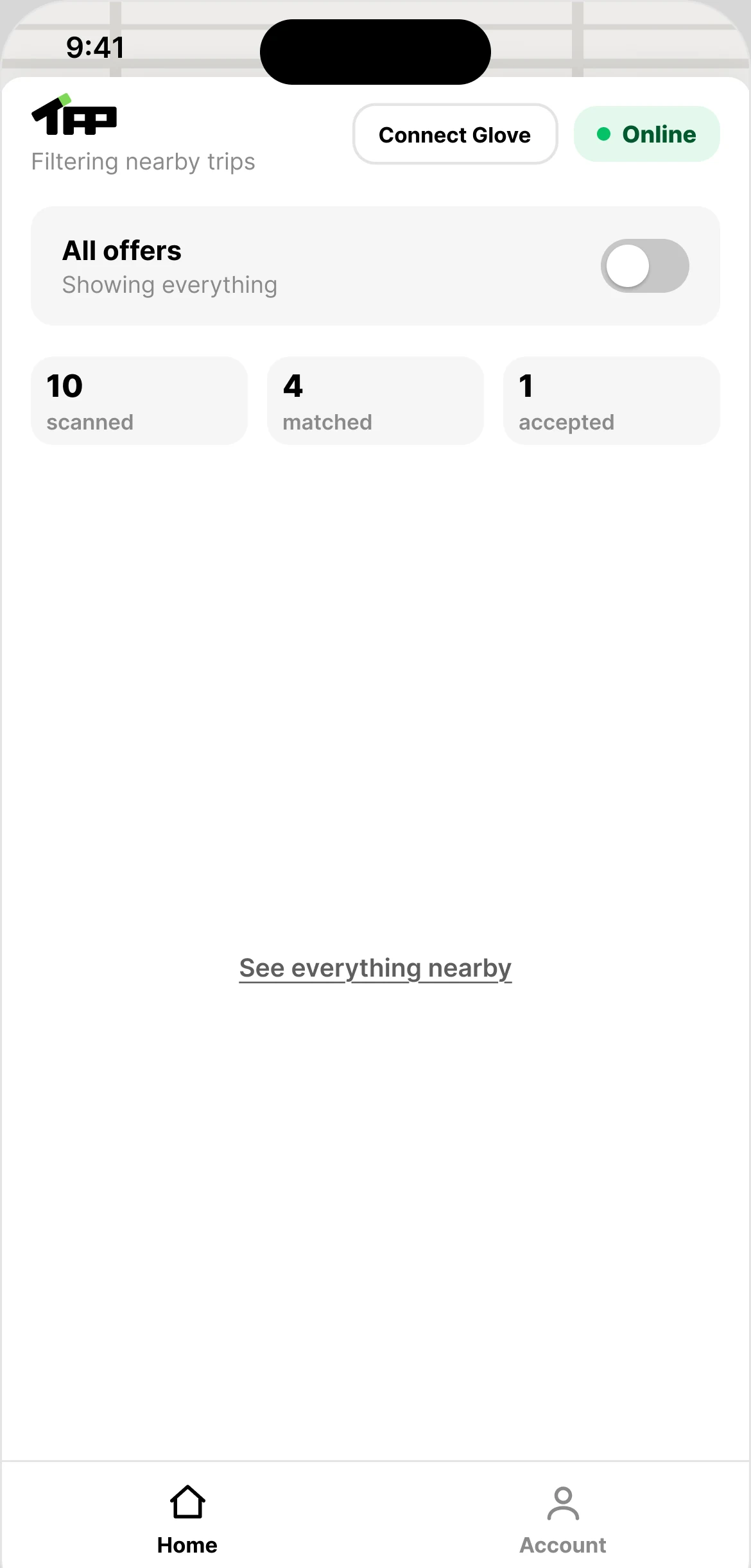
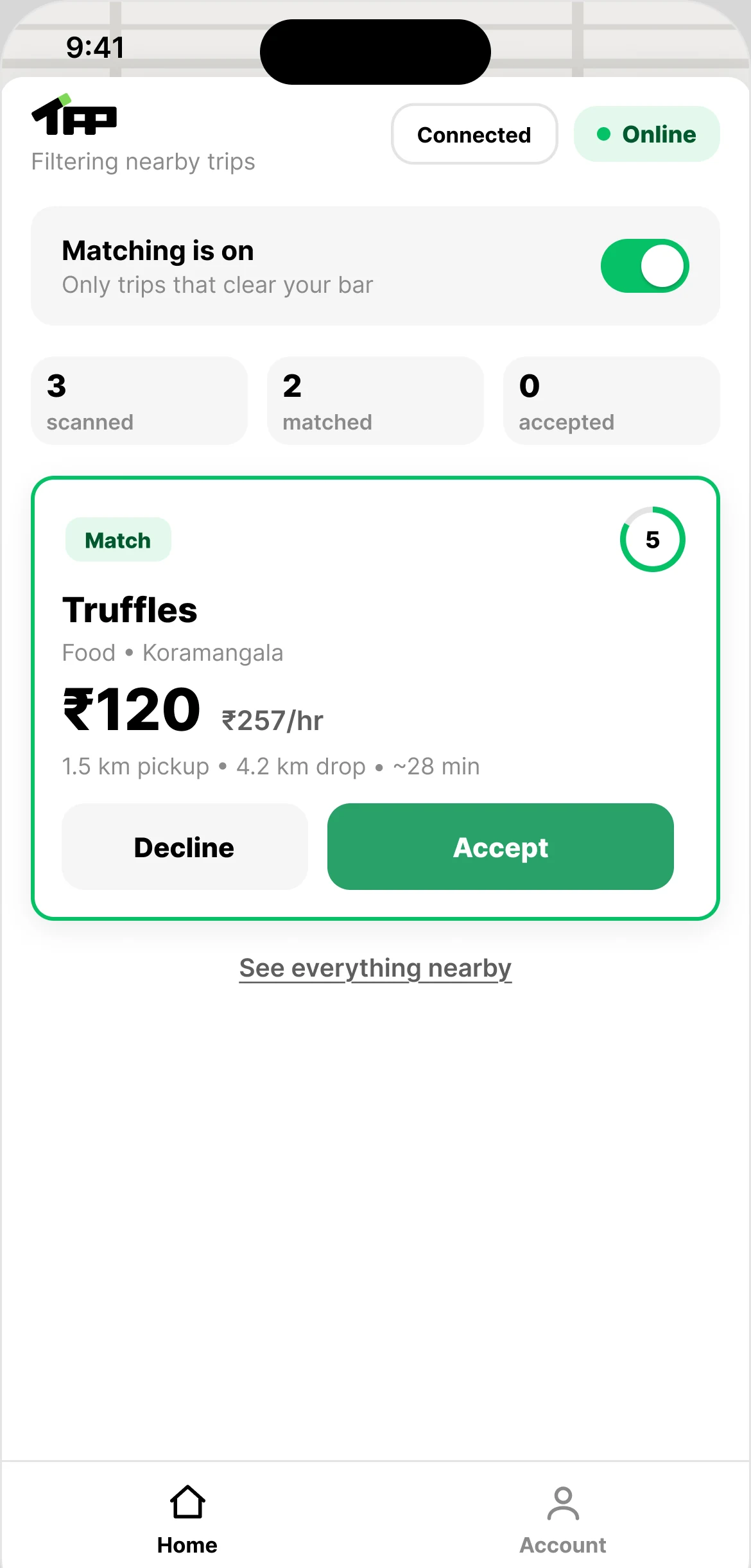
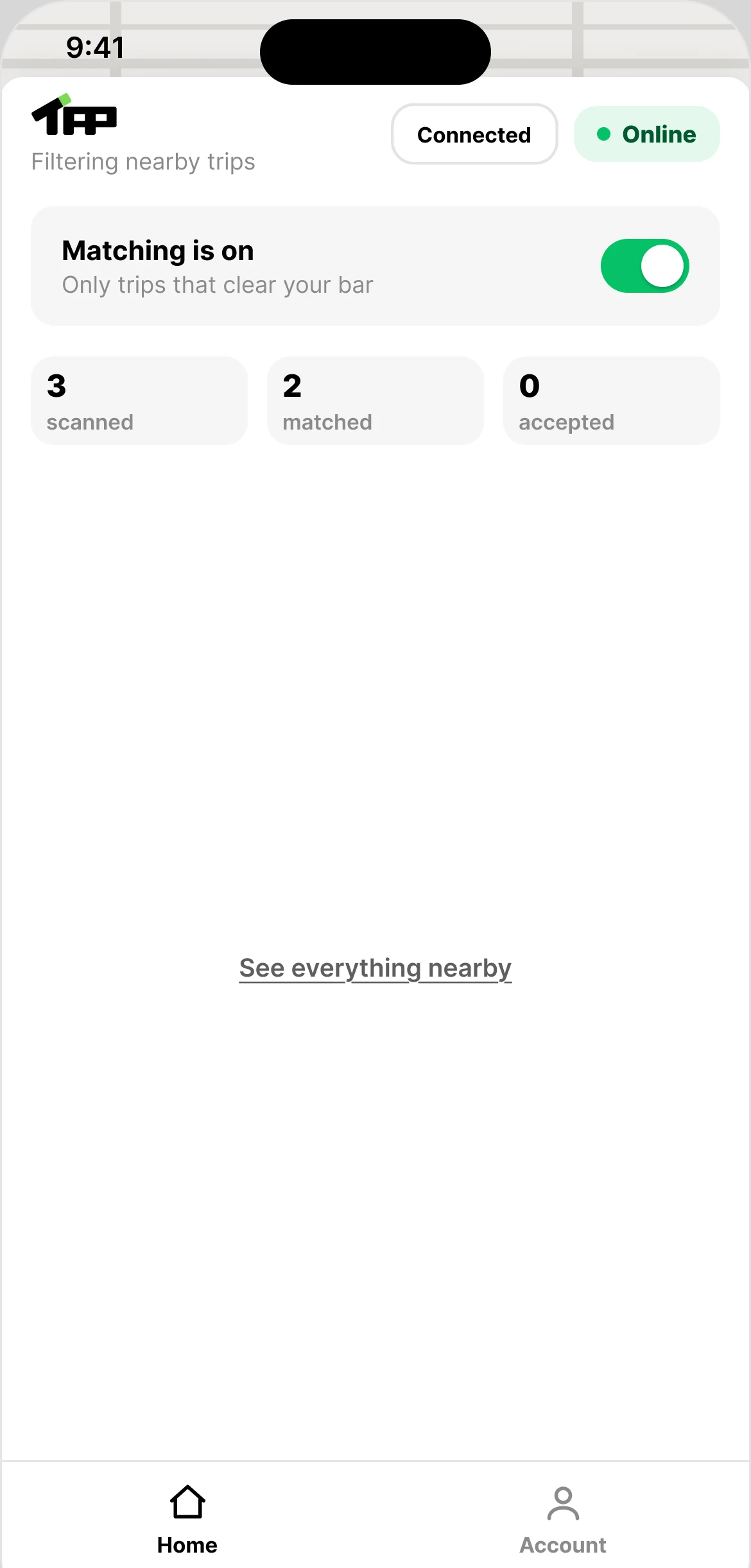
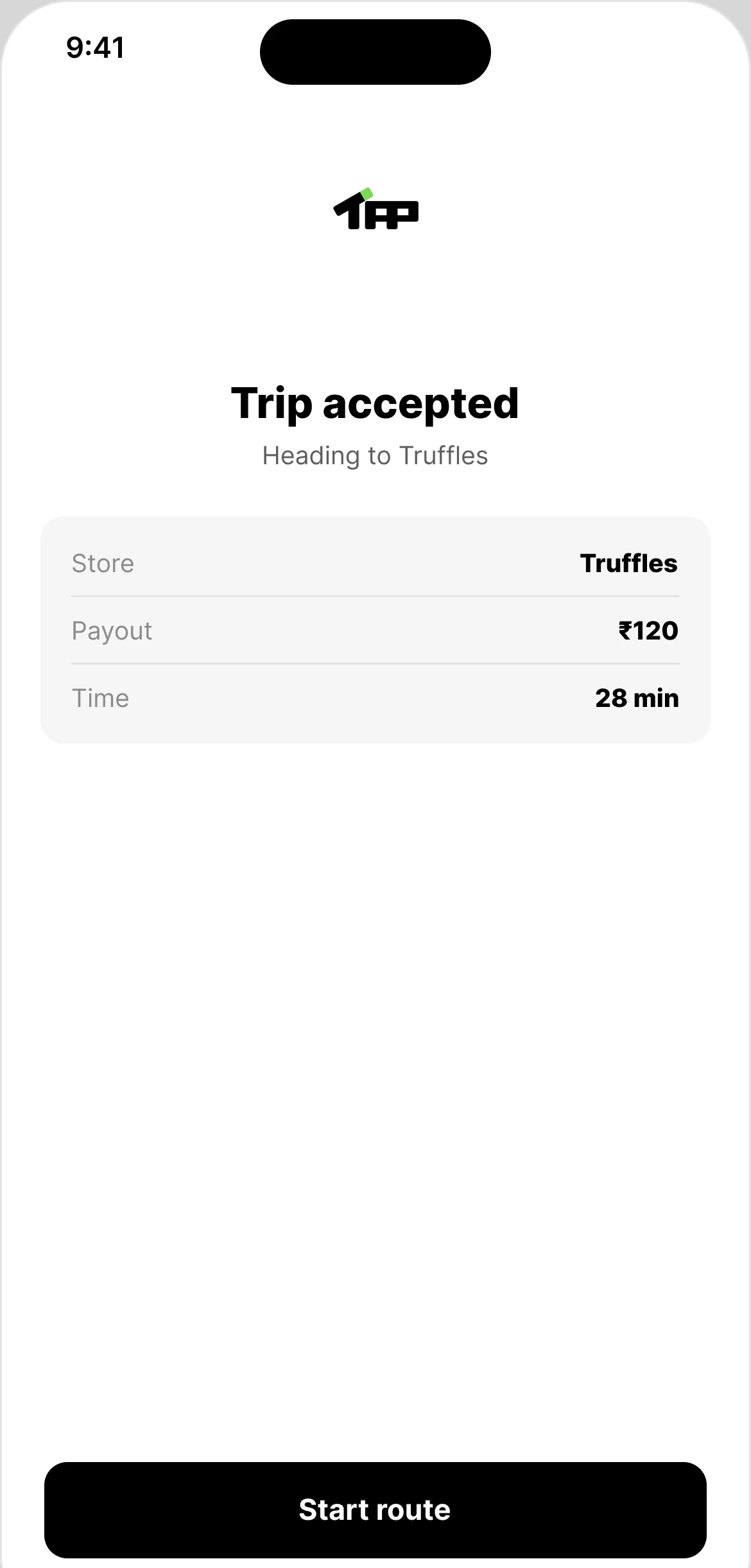
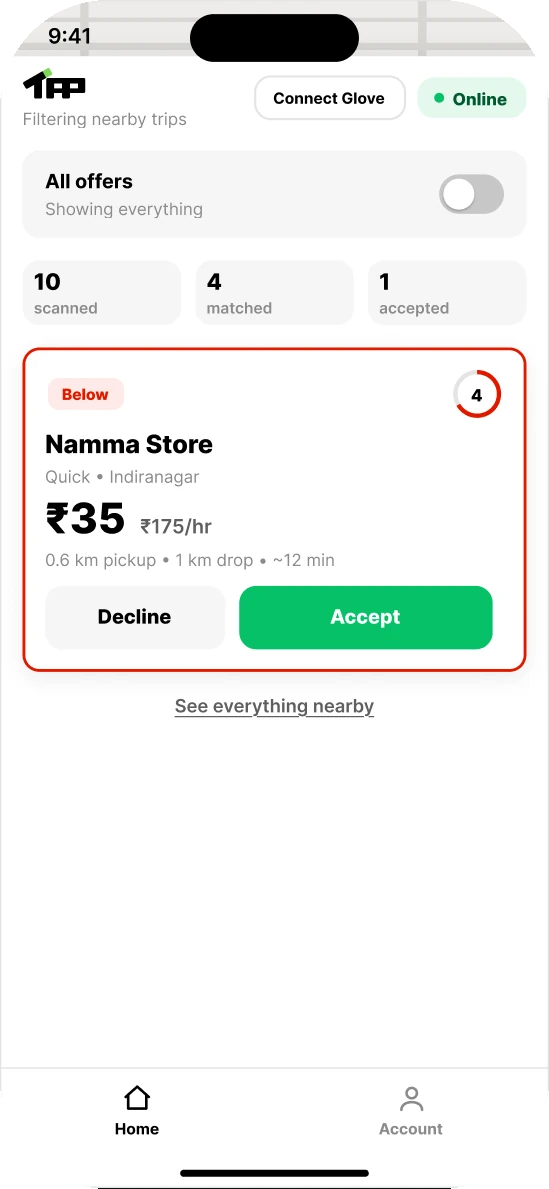
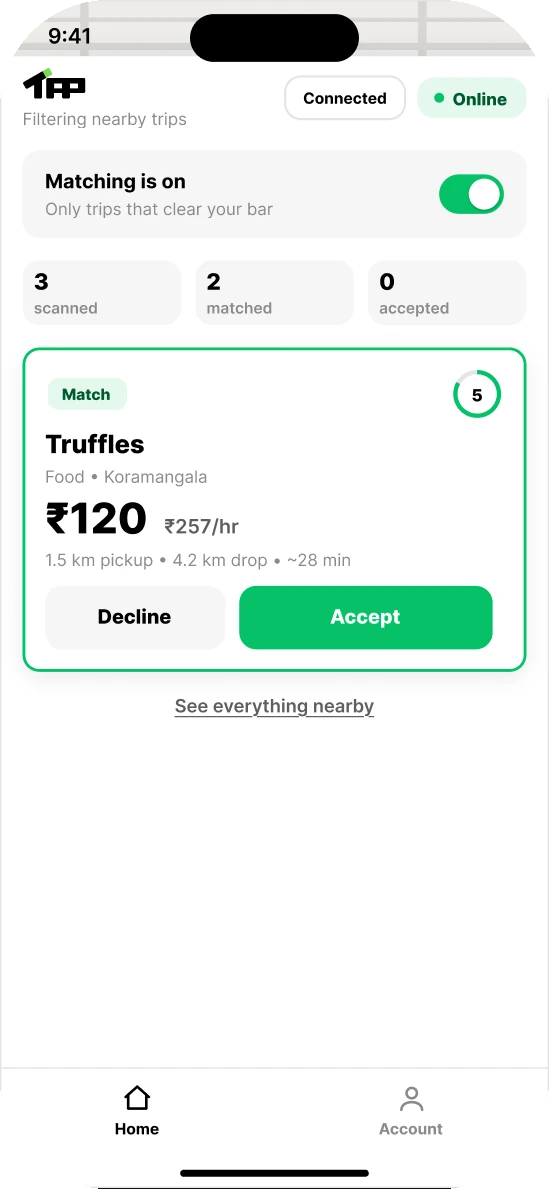
During onboarding, riders set a minimum pay rate, pickup distance, payout and zones. With Matching on, offers that miss the bar are skipped quietly. With it off, every offer shows up and the glove lights green for a match or red for one that doesn’t. Each offer runs on a six-second countdown, so doing nothing is a decision too.
Riders set a minimum pay rate, pickup distance, payout and zones once. With Matching on, offers that miss the bar are skipped quietly and the glove lights red.
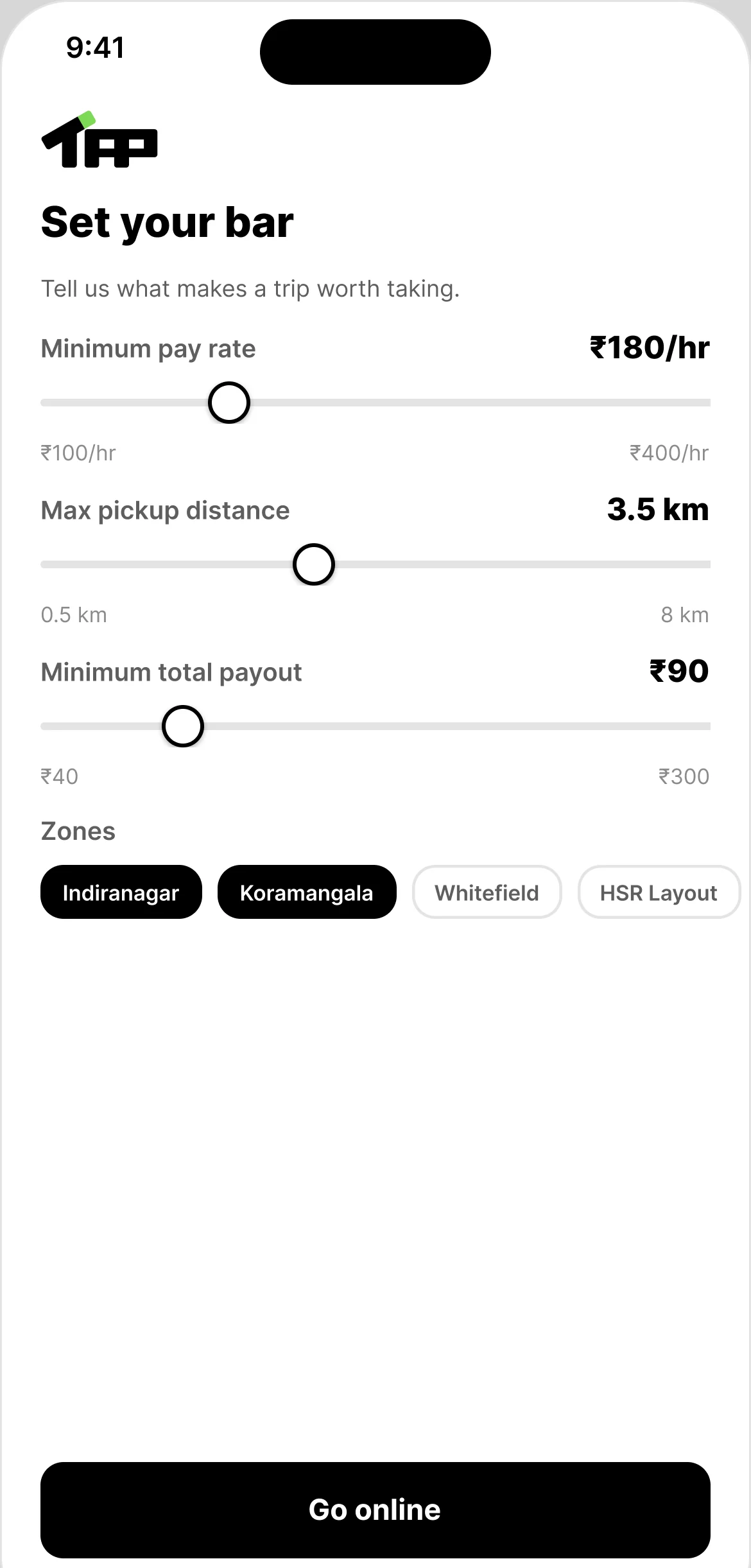
Set your barPay rate, pickup, payout, zones
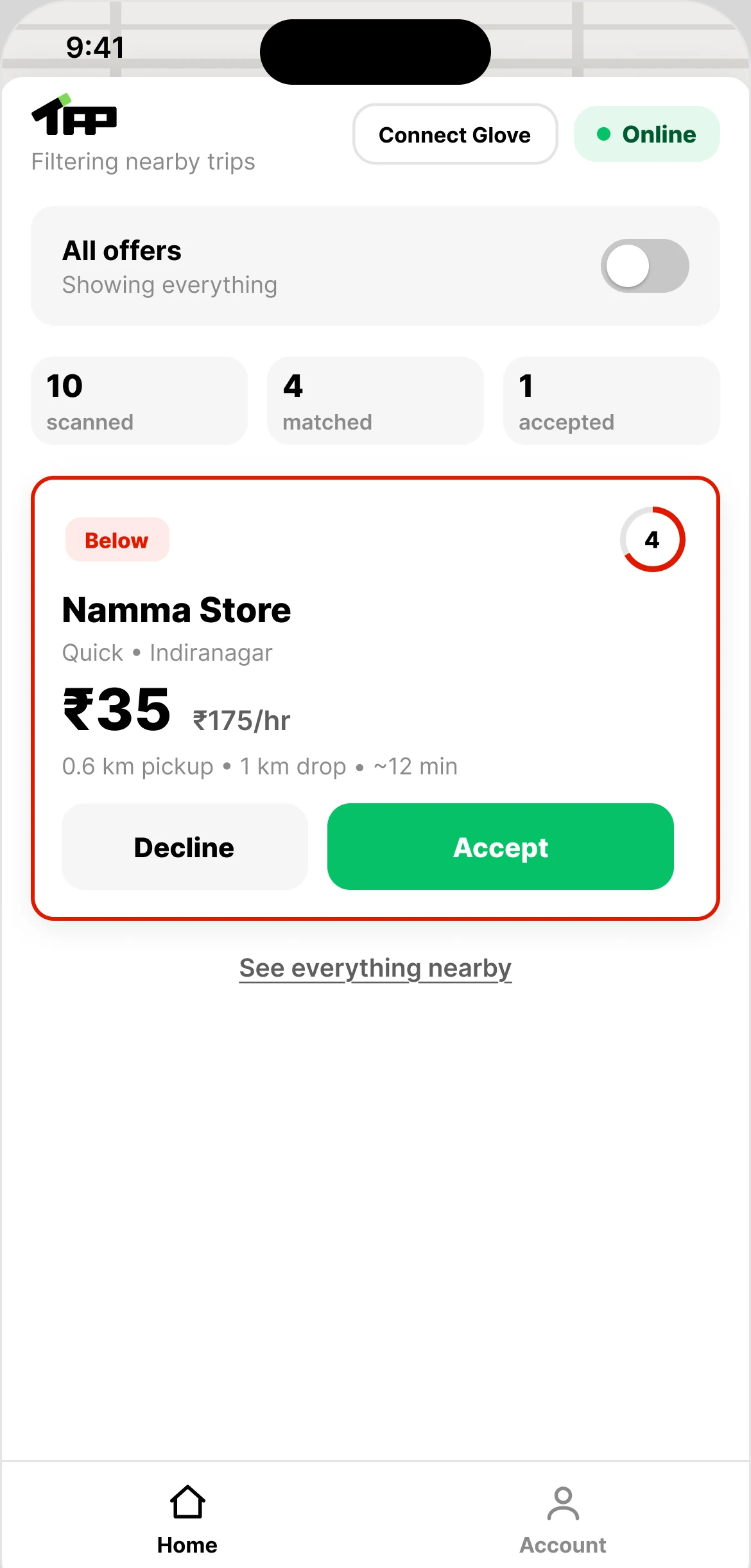
Below your barGlove lights red, six-second countdown
When an offer clears the bar the glove glows green. A double pinch on the grip accepts it, and doing nothing lets it lapse, so no tap on the phone is needed.
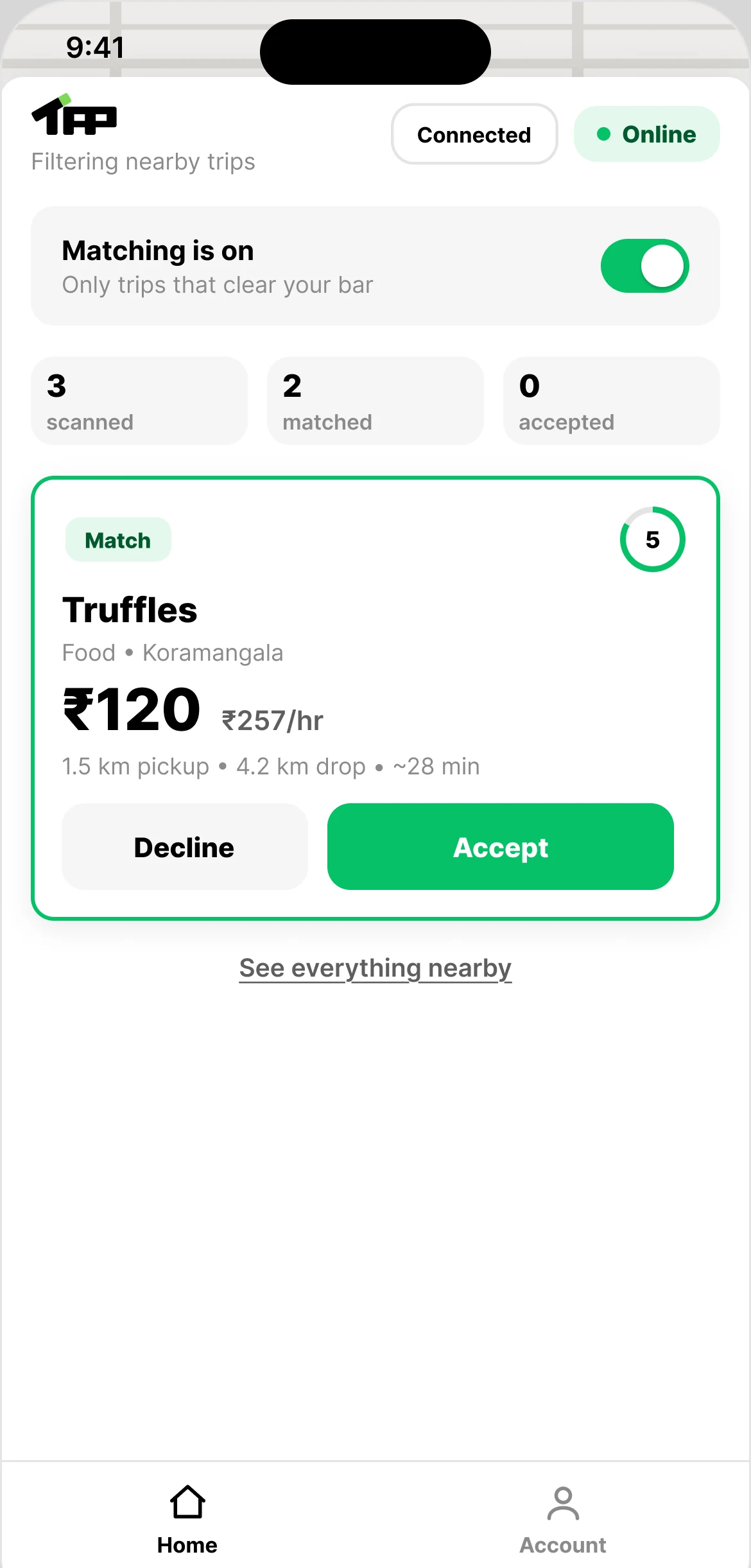
A matchGreen light, double-pinch to accept
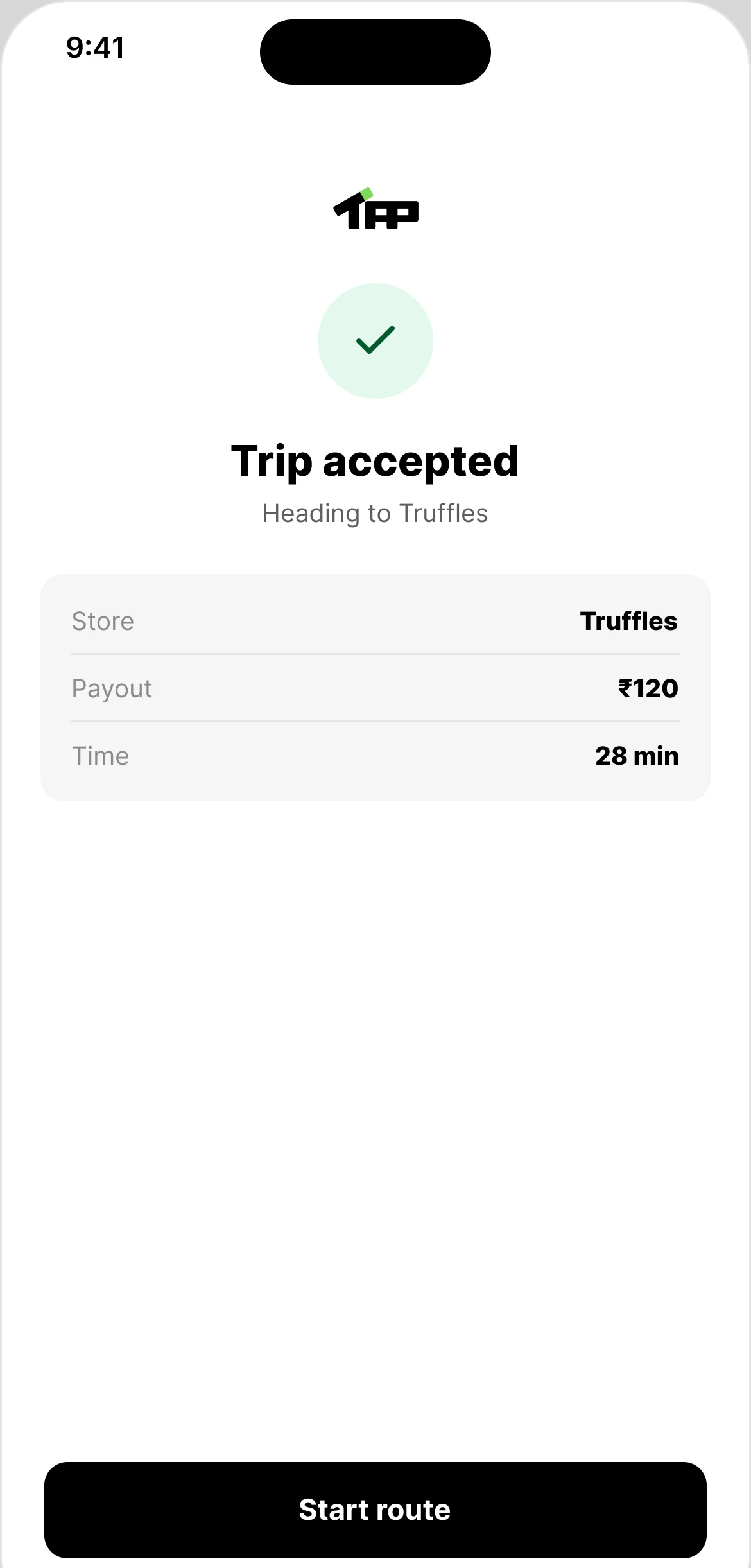
Trip acceptedBlue light, start the route
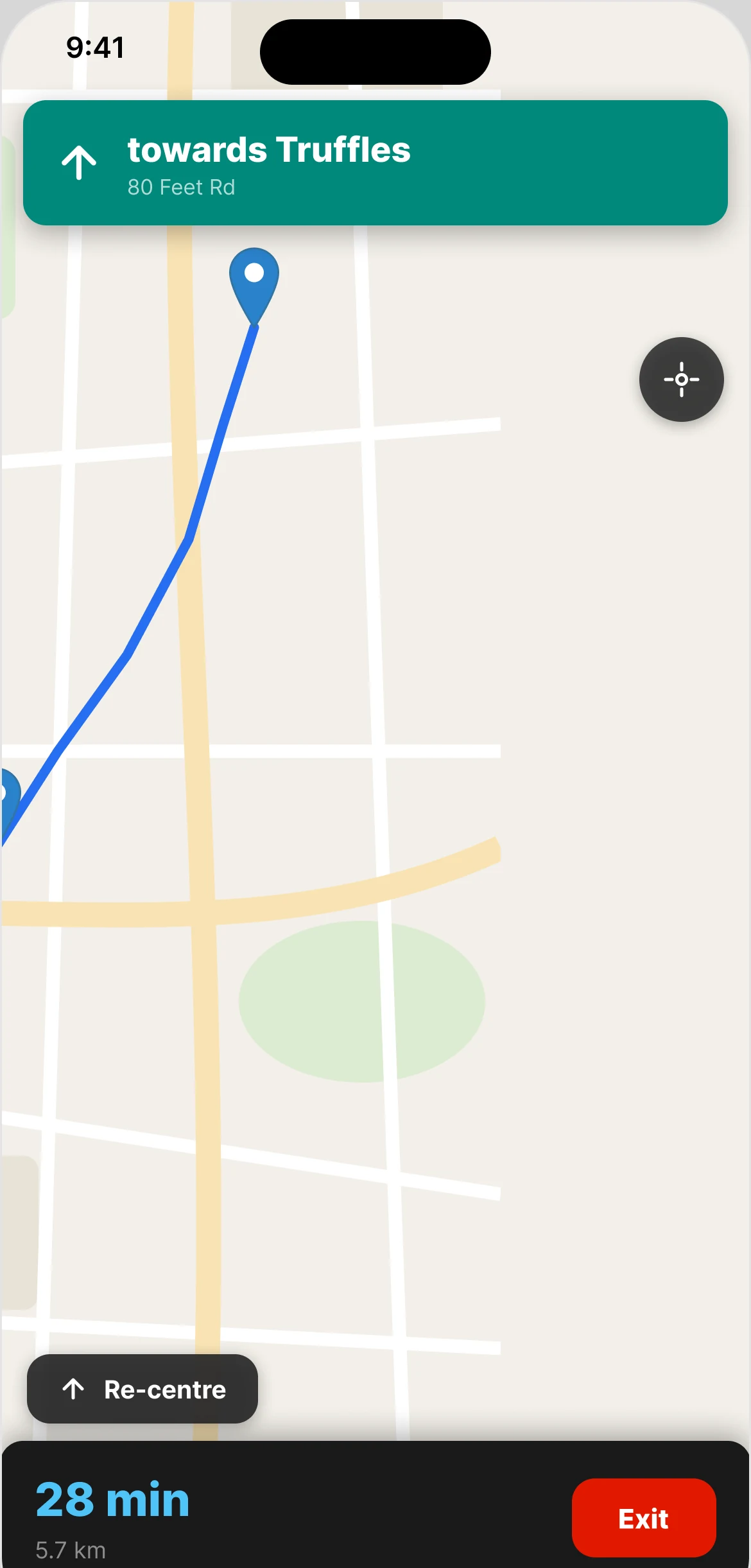
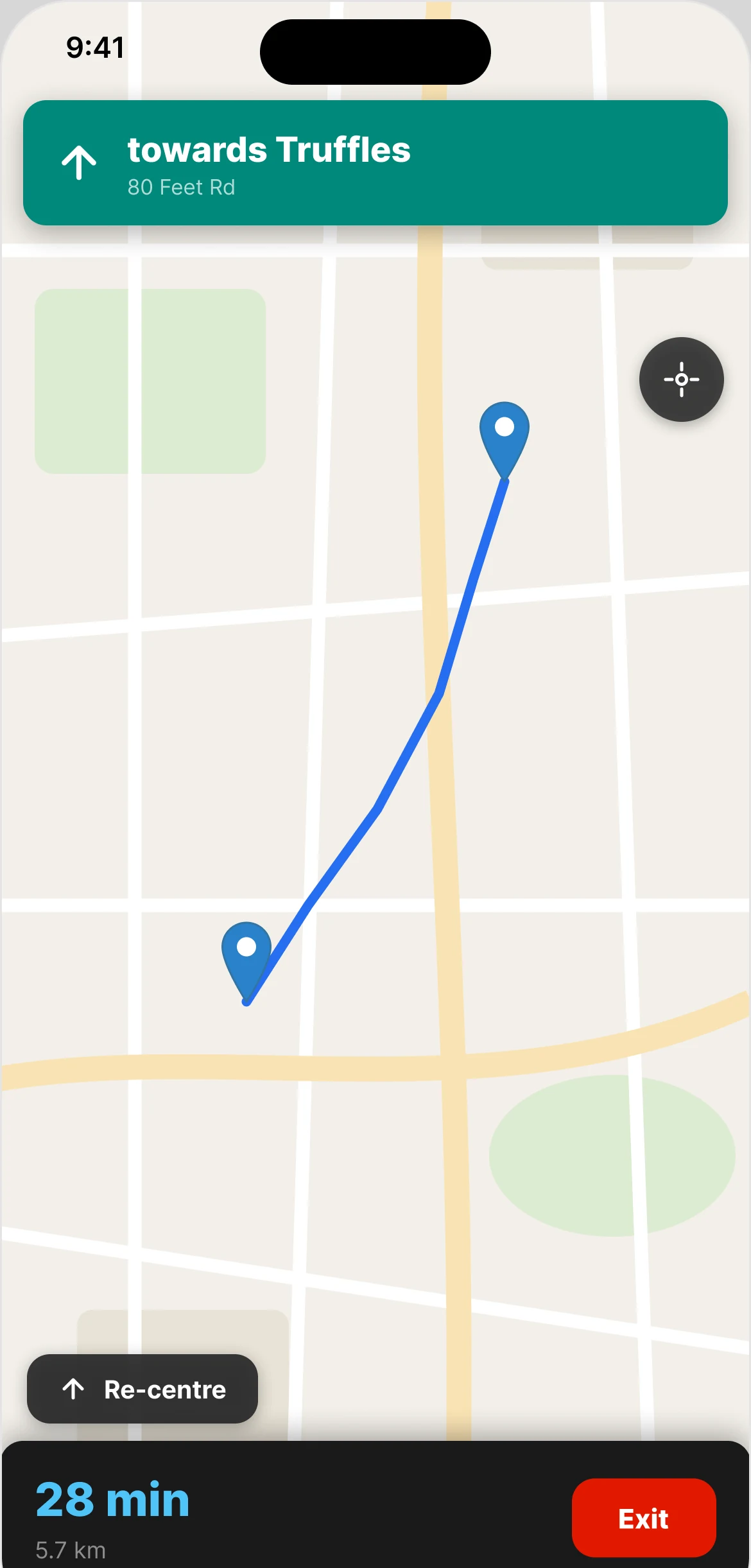
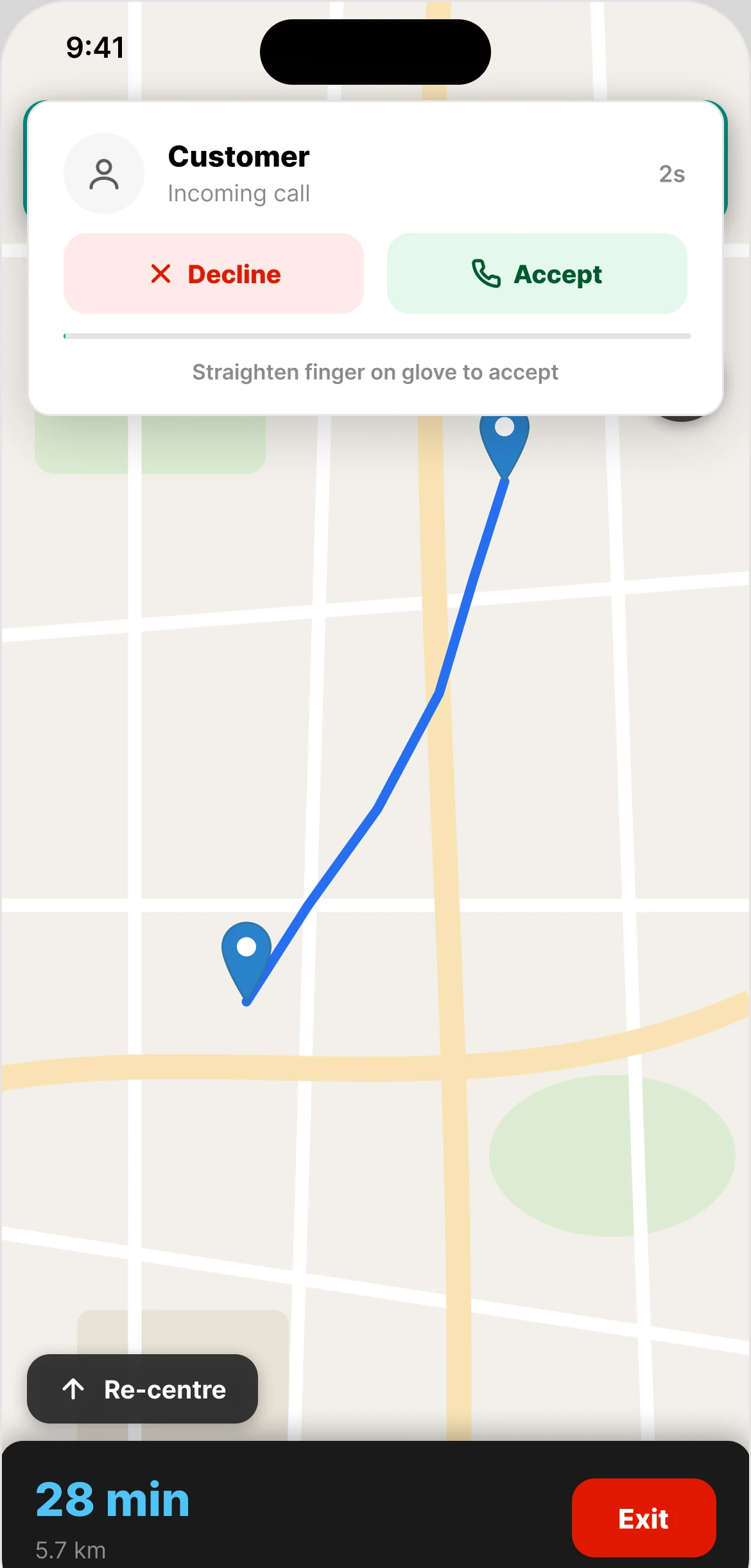
Mid-ride, a squeeze on the grip re-centres the map, and straightening a finger answers a customer call, all without letting go of the handlebar.
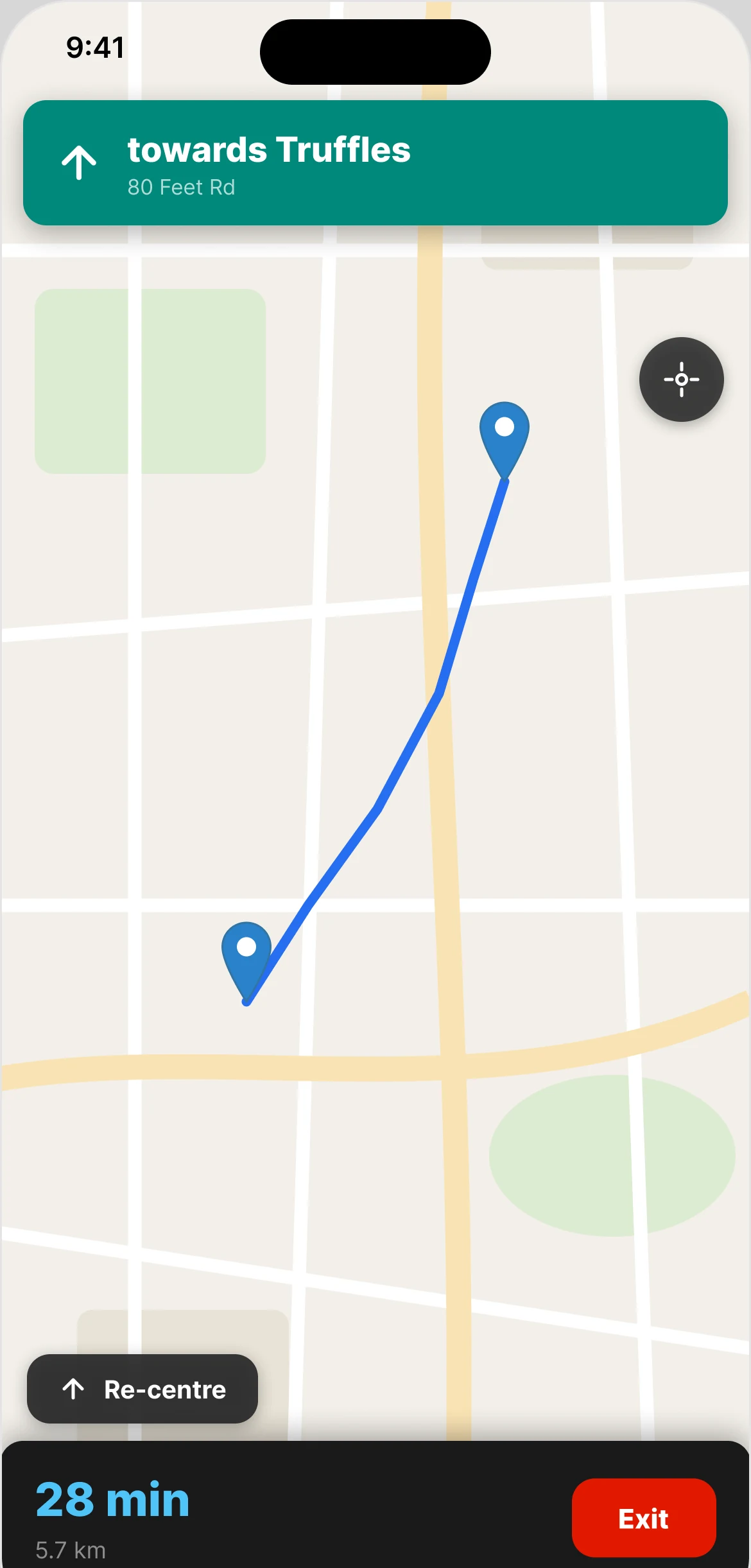
NavigatingSqueeze the grip to re-centre
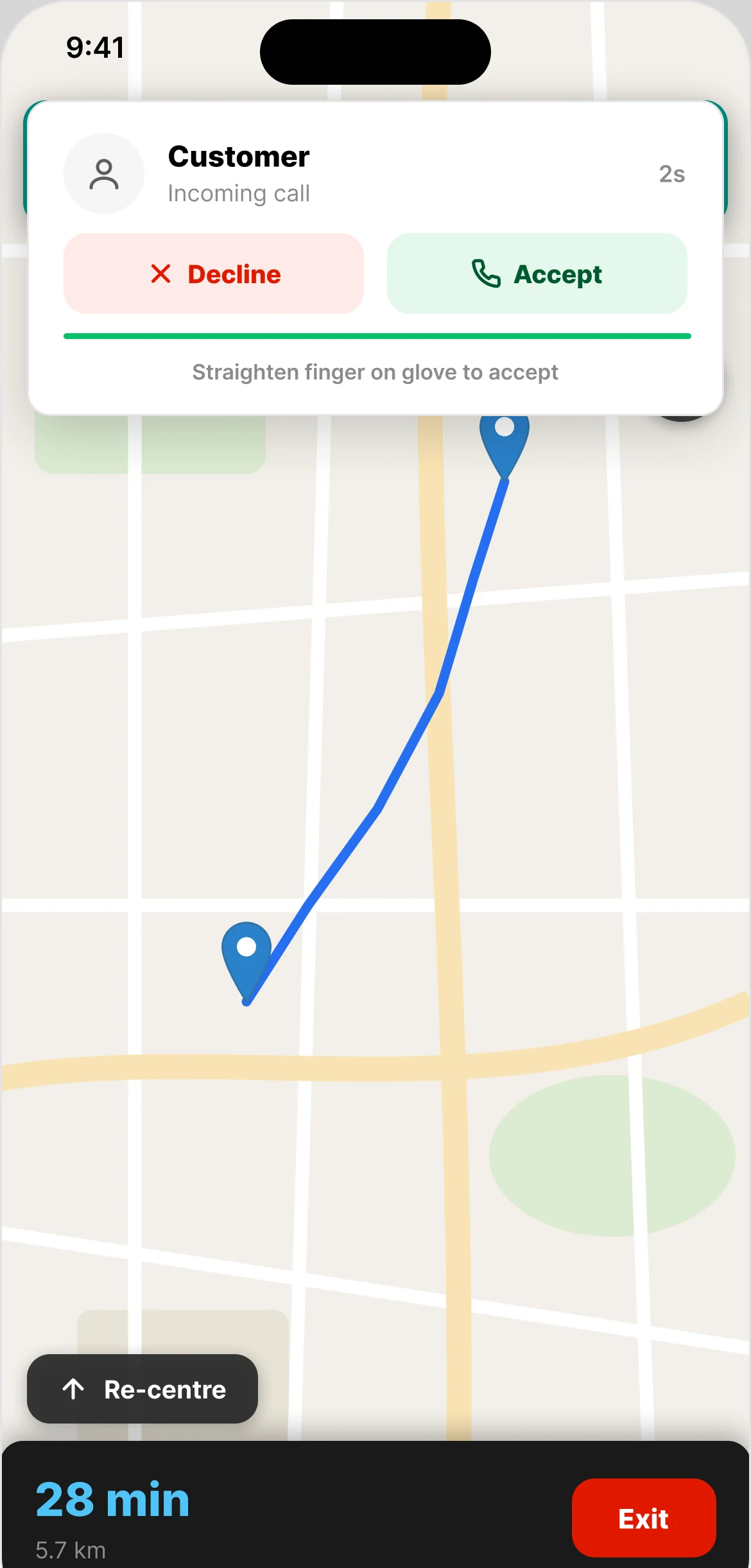
Incoming callStraighten a finger to answer
Testing
We borrowed the shape of a published smart-glove study for riders: repeatability in the lab, false triggers against everyday motions, then a short field pilot with a usability score. In-class bicycle trials and rider feedback shaped the gestures; the formal numbers below are still to be collected.
Testing glove gestures and validating responses through the mobile app.
Each gesture is a timed pattern, not a single reading, so resting noise and quick knocks never fire.
Why the flex sensor has two thresholds
A finger resting straight would answer every call. So the glove must first see a bend (above 400), then a straightened finger held for 2 seconds. After it fires, it disarms until the next bend.
Session 1
One rider on a parked bike, engine off and then idling. Each gesture 20 times with gloves on.
Measures: Detection rate · time to event (serial log)
Session 2
The glove stays armed through braking, gear shifts, visor wipes, horn and indicators, and rough road, 20 times each.
Measures: Unwanted events per motion
Session 3
Five gig riders, a short loop, accepting offers by phone tap and by glove.
Measures: Time to accept · glances at phone · SUS
Initial testing revealed multiple sensor issues when connected to the ESP32, mainly due to wiring and voltage compatibility. Each sensor required individual calibration and circuit adjustments to ensure reliable readings. The fixes below are now integrated into the final firmware and circuit.
Flex sensor · answer call
Too sensitive
Small, everyday finger movements on the grip were enough to read as a gesture.
| Before | After (firmware) | |
|---|---|---|
| Trigger | Any bend | Bend > 400, then < 300 |
| Hold | None | 2 s straight |
| Re-fire | Immediate | Re-bend + 3 s cooldown |
Fix
Reduced sensitivity with a 10 kΩ resistor in the divider, then added two thresholds: bend above 400 to arm, straighten below 300 and hold 2 s to fire.
Force sensor · re-centre
Accidental triggers
Resting pressure from a normal grip kept crossing the threshold and re-centred the map when no one asked.
| Before | After (firmware) | |
|---|---|---|
| Trigger | Any reading ≥ 50 | Reading ≥ 50 |
| Hold | None | 0.5 s squeeze |
| Re-fire | Immediate | 2 s cooldown |
Fix
Retuned the sensor and made the squeeze count only if held for 0.5 s, with a 2 s cooldown, so only a deliberate squeeze re-centres.
Touch pad · accept order
Fired before touching
The pad triggered as the finger came close, before actually touching it.
| Before | After (firmware) | |
|---|---|---|
| Trigger | Finger near pad | Actual contact |
| Hold | None | 60 ms steady |
| Re-fire | Immediate | Release + 0.5 s |
Fix
Corrected the sensitivity and required 60 ms of steady contact, with release needed before it can fire again.
Projections based on the firmware thresholds and our parked-bike trials. These are targets for the formal sessions, not measured results.
Formal measurements (detection rate, false triggers, time to accept, SUS) follow the protocol above and come next. Method adapted from M. Borghetti, N. F. Lopomo and M. Serpelloni, “Novel Smart Glove for Ride Monitoring in Light Mobility,” Instruments 9(1):6, 2025.
Reflection
Designing beyond the screen meant treating rain, dust, engine vibration, sweat and stop-and-go traffic as design inputs, not edge cases. Next, I’d measure the false-positive rate against a library of everyday riding motions, then pilot the glove with a small group of riders on real shifts.